Software Supply Chain Risk in Package Managers, Including AI-Driven Slopsquatting
Supply Chain Risk · 2 sources · Updated 5mo ago · First seen Mar 12, 2026

ENISA published a March 2026 technical advisory on the secure use of package managers, warning that modern development workflows (e.g., npm, pip, Maven) can pull in far more code than developers expect due to direct and transitive dependency resolution. The advisory highlights how applications inherit large dependency graphs—often including unused modules—that still introduce vulnerabilities, maintenance and provenance risk, and expanded trust assumptions across the software supply chain. ENISA recommends secure practices for selecting, integrating, monitoring, and remediating vulnerable third-party dependencies as part of the SDLC.
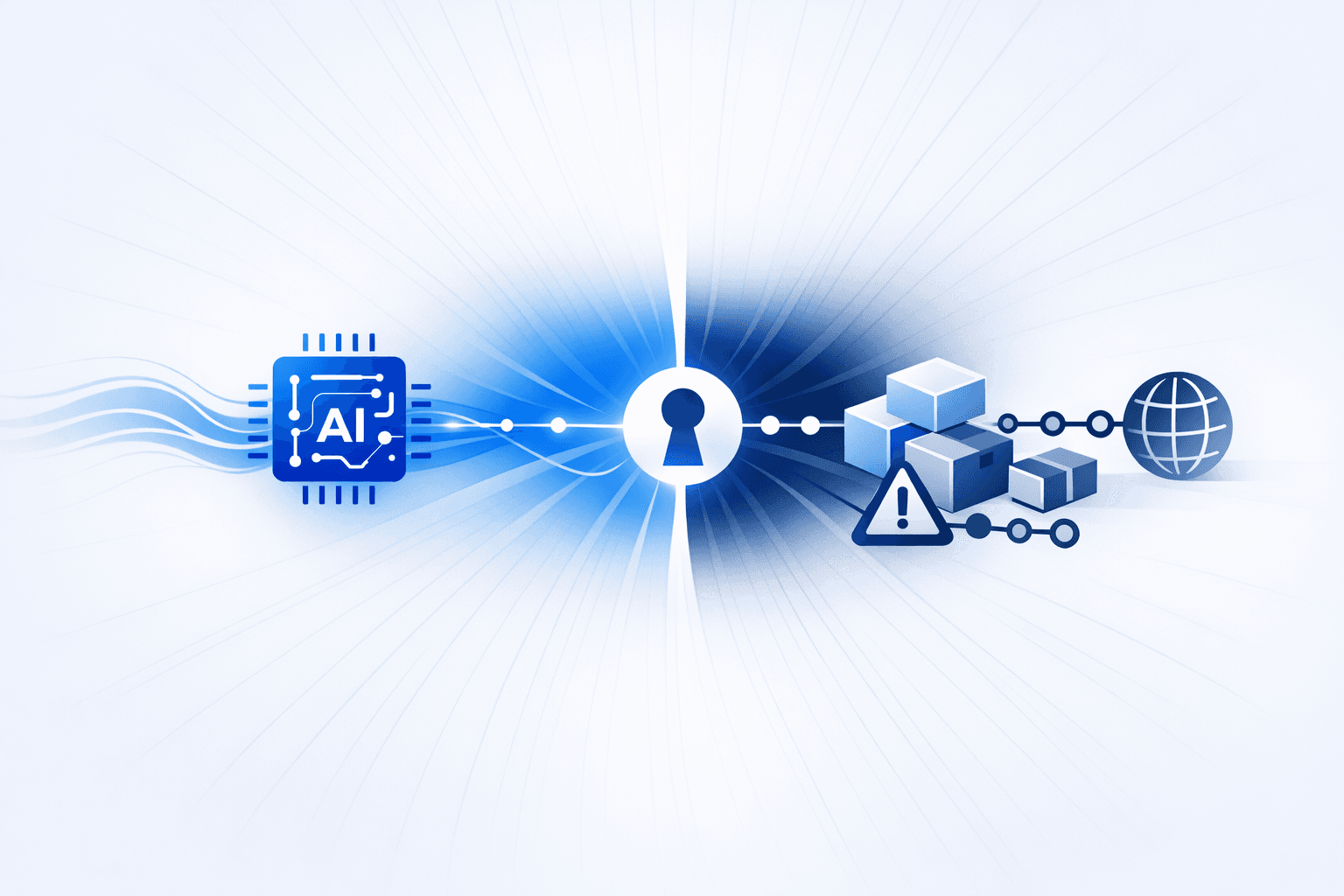
Separately, security researchers and industry commentary describe slopsquatting, a supply-chain technique that exploits AI coding assistants’ tendency to hallucinate plausible-but-nonexistent package names. Attackers can register those “phantom” names in public repositories and publish packages that appear to match the expected functionality while embedding malicious payloads, turning AI-generated suggestions into a predictable package-name acquisition strategy. The risk is positioned as distinct from typosquatting (human error) and is framed as requiring additional detection approaches beyond traditional controls, including more behavioral and validation-focused checks before adopting AI-suggested dependencies.
Why it matters
Impact assessment
Modern software teams using package managers such as npm, pip, and Maven are affected, especially organizations with CI/CD-heavy development, broad open-source dependency use, and AI-assisted coding workflows. The impact can be severe because a single dependency decision can introduce vulnerable or malicious code into build systems, developer workstations, and downstream production applications, creating risk of code execution, data exposure, operational disruption, and reputational damage.
This exposure is widespread rather than narrowly targeted because transitive dependency resolution is a standard development pattern and AI-generated dependency suggestions are increasingly common across industries. The story does not cite a specific in-the-wild exploitation campaign or named victim set, but it describes credible supply-chain attack paths that can scale broadly through public registries and automated installation/update workflows.
Supporting facts
- Affected ecosystems: npm, pip, Maven, and other package-manager-driven development environments.
- Affected populations: software developers, DevOps teams, CI/CD operators, and organizations consuming third-party open-source packages.
- Exposure drivers:
- Direct and transitive dependencies expand the effective software supply chain.
- Unused modules can still introduce vulnerabilities and trust assumptions.
- Public repository consumption can import code not directly reviewed by internal teams.
- AI/LLM-assisted development can introduce dependencies developers did not independently validate.
- Potential business impacts:
- Malicious package execution during build or runtime.
- Propagation of vulnerable components into production applications.
- Increased incident response and remediation costs due to deep dependency graphs.
- Reputational and compliance risk if compromised dependencies affect customer-facing software.
- Known exploitation status:
- No specific CVE or confirmed active campaign is provided.
- The slopsquatting technique is described as an emerging attacker strategy rather than a documented named intrusion set activity.