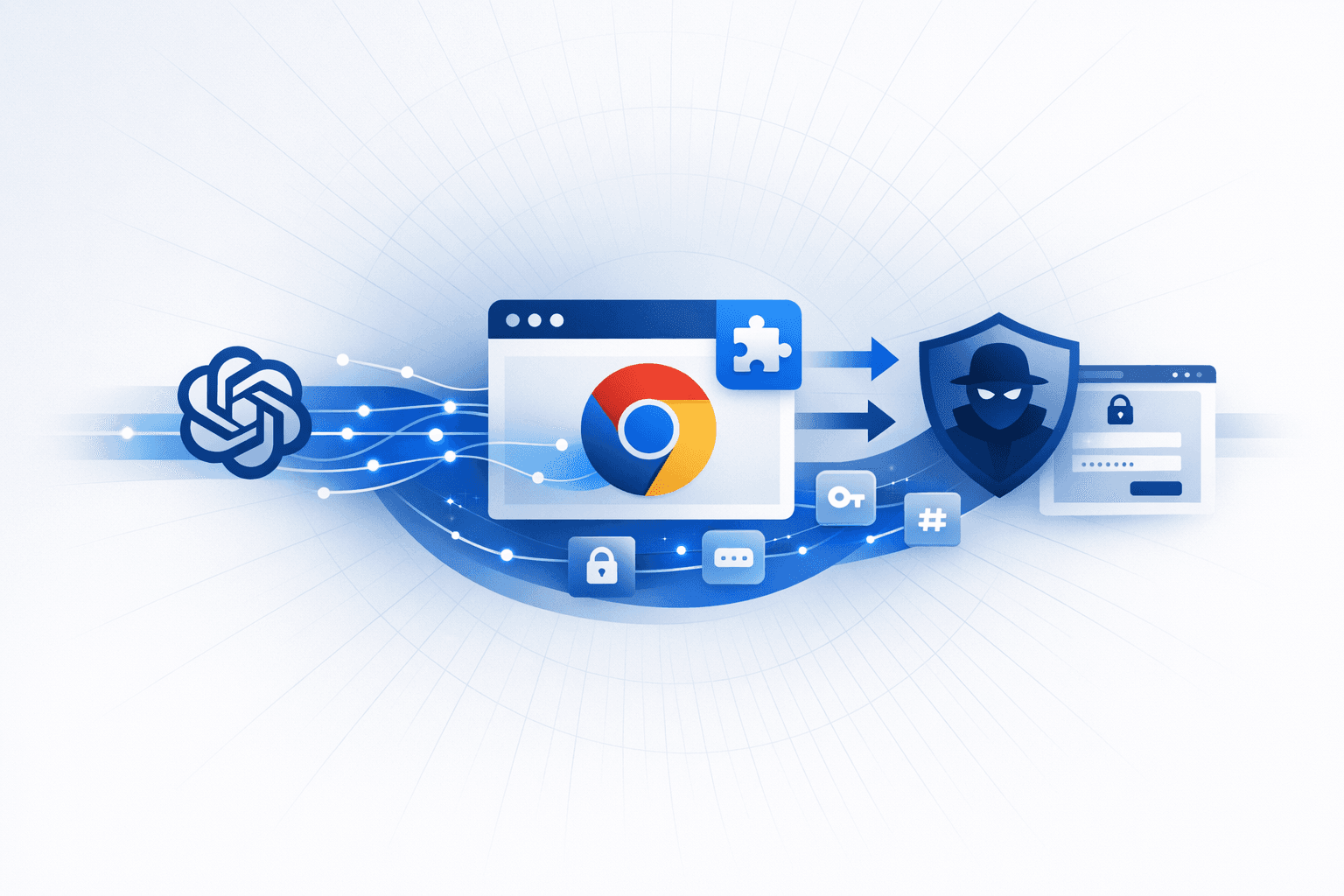
Malicious Chrome Extensions Used for Data Theft via Ownership Transfers and Impersonation
Supply Chain Risk · 3 sources · Updated 5mo ago · First seen Mar 9, 2026

Multiple malicious Chrome/Chromium extensions were identified abusing the Chrome Web Store to steal data from users and enterprises. Two previously legitimate extensions—QuickLens (kdenlnncndfnhkognokgfpabgkgehodd) and ShotBird (gengfhhkjekmlejbhmmopegofnoifnjp)—reportedly turned malicious after ownership transfers, enabling downstream compromise through injected code and data harvesting. In the QuickLens case, researchers reported the malicious update preserved expected functionality while adding capabilities to strip security headers (e.g., X-Frame-Options) and facilitate script injection that can bypass Content Security Policy (CSP) protections, expanding the attacker’s ability to make cross-domain requests and collect sensitive information.
Separately, Microsoft reported a campaign of counterfeit “AI assistant” browser extensions distributed via the Chrome Web Store (and therefore also impacting Microsoft Edge environments that allow Chrome extensions), which allegedly affected 20,000+ enterprise tenants and amassed roughly 900,000 installs. These extensions impersonated legitimate AI productivity tools and harvested ChatGPT/DeepSeek conversation histories, visited URLs, and browsing telemetry, staging data for exfiltration to attacker-controlled infrastructure. Another Chrome Web Store threat involved a fake imToken-branded extension (“lmΤoken Chromophore”) that masqueraded as a benign tool but redirected victims to phishing infrastructure to steal seed phrases and private keys, using tactics like hardcoded remote configuration (via JSONKeeper) and decoy navigation to the legitimate token.im site after credential capture.
Why it matters
Impact assessment
Malicious Chromium extensions are creating both enterprise data-theft risk and direct endpoint compromise risk through trusted browser distribution channels. Affected populations include Chrome and Edge users, enterprises that permit Chrome Web Store extensions, AI-platform users handling sensitive internal data, and cryptocurrency users exposed to wallet-phishing extensions.
The impact ranges from theft of credentials, chat histories, browsing telemetry, and crypto wallet secrets to potential malware execution on Windows endpoints via ClickFix-style social engineering. Scope is broad for the counterfeit AI-extension campaign, which reportedly affected more than 20,000 enterprise tenants and roughly 900,000 installs, while the QuickLens, ShotBird, and fake imToken cases appear more targeted but still operationally significant because they abuse legitimate-looking extensions and ownership transfers.
Supporting facts
- QuickLens and ShotBird reportedly became malicious after ownership transfers, turning previously legitimate extensions into delivery mechanisms for injected code and data theft.
- QuickLens had about 7,000 users; ShotBird had about 800 users.
- Microsoft reported counterfeit AI-assistant extensions impacting 20,000+ enterprise environments with about 900,000 installs.
- The AI-themed extensions harvested ChatGPT and DeepSeek conversation histories, visited URLs, telemetry, model names, and session identifiers.
- Stolen AI-chat content could include internal code, strategic plans, and proprietary workflows.
- ShotBird reportedly progressed beyond browser theft by presenting a fake Chrome update and driving users into a ClickFix flow that downloaded a Windows executable named googleupdate.exe.
- The fake imToken extension targeted seed phrases and private keys, enabling immediate wallet takeover and financial loss.
- Edge environments are also exposed where Chrome/Chromium extensions are allowed.
- Known in-the-wild abuse is described across all three stories: malicious updates in QuickLens and ShotBird, active enterprise telemetry tied to fake AI extensions, and active phishing infrastructure for the fake imToken extension.