European Law Enforcement Takedowns of Phishing and Investment-Fraud Networks
Regulatory & Policy · 2 sources · Updated 5mo ago · First seen Feb 24, 2026
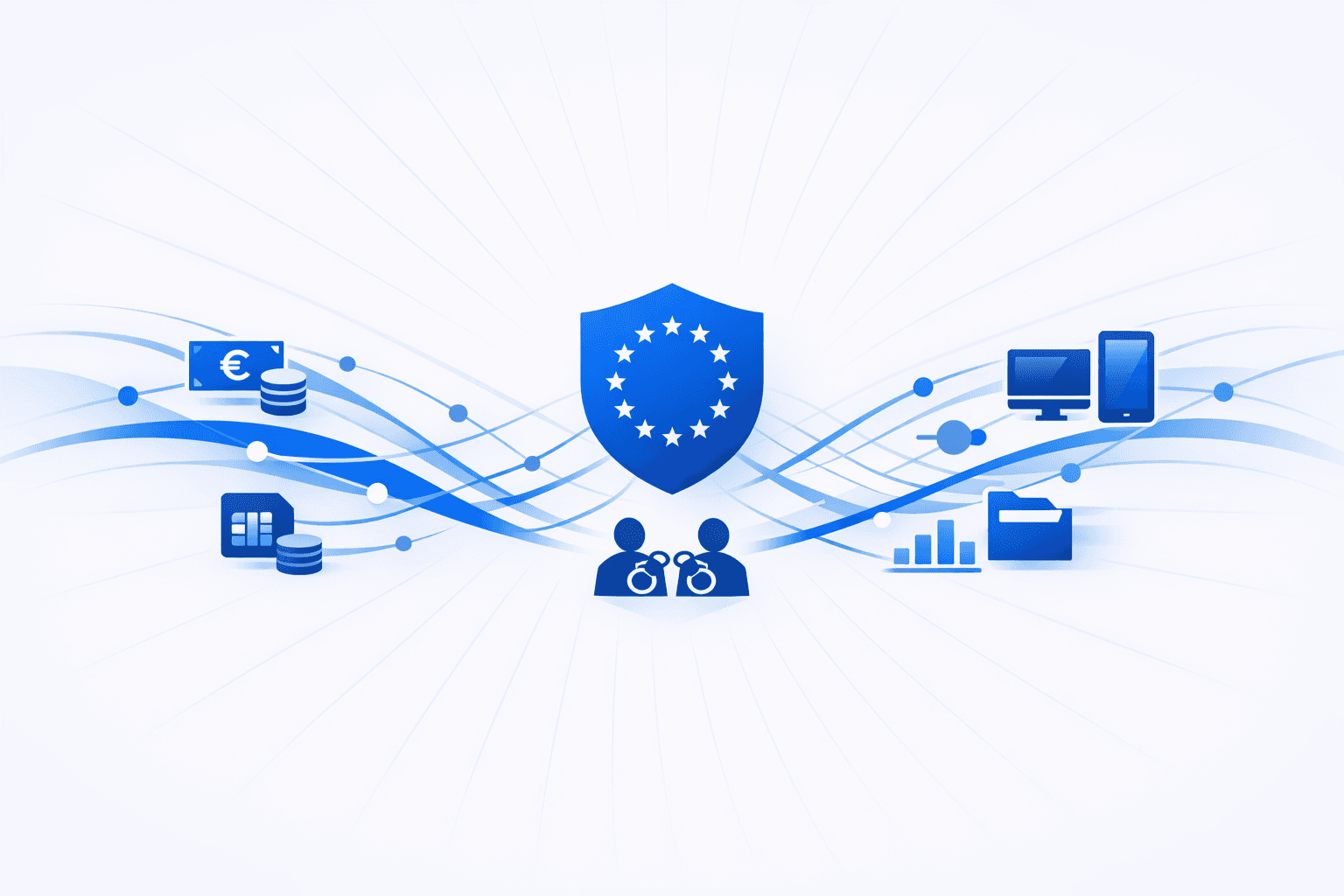
European law enforcement reported multiple cyber-enabled fraud disruptions, including a Eurojust-supported operation that dismantled a fraudulent call-centre network operating from three offices in Dnipro. Authorities from Latvia, Lithuania, and Ukraine arrested 11 suspects, seized more than €400,000 in cash, and collected electronic evidence (computers, SIM cards, documents) during searches at 32 locations. The group allegedly ran a fake cryptocurrency investment platform and used remote access software to gain access to victims’ online banking and move funds to accounts and crypto wallets under their control.
Separately, Poland’s Central Bureau for Combating Cybercrime (CBZC) dismantled an organized group operating in Poland and Germany that used phishing to hijack Facebook accounts and extract BLIK payment codes. Investigators identified 11 group members, placed six in pretrial detention, and seized over 100,000 stolen Facebook credentials; prosecutors filed 400+ charges including unauthorized access, online fraud, and money laundering. A South Korean case involving the breach of Seoul’s bike-hire service Ttareungyi (4.62 million users affected) is a distinct incident and not part of the European takedown actions described above.
Why it matters
Impact assessment
These disruptions highlight active, financially motivated fraud operations targeting consumers across Europe through fake investment platforms, phishing, account takeover, and payment-code theft. The primary affected populations are retail banking users, cryptocurrency investors, Facebook users, and users of regional instant-payment systems such as BLIK; impacts include direct financial loss, account compromise, fraud propagation through trusted social accounts, and follow-on money laundering.
The scope appears cross-border rather than isolated, with operations spanning Ukraine, Latvia, Lithuania, Poland, and Germany. Exploitation was confirmed in the wild: authorities reported identified victims in Latvia and Lithuania losing more than €160,000, seizure of more than 100,000 stolen credentials in the Poland/Germany case, and law-enforcement action against 11 suspects in each operation.
Supporting facts
- Entities involved: Eurojust; Latvia, Lithuania, and Ukraine law enforcement; Poland’s Central Bureau for Combating Cybercrime (CBZC).
- Fraud call-centre network operated from three offices in Dnipro.
- Searches occurred at 32 locations.
- Authorities arrested 11 suspects in the Eurojust-supported case.
- Authorities seized more than €400,000 in cash in the Eurojust-supported case.
- Initial identified victims in Latvia and Lithuania lost more than €160,000.
- Additional victims are suspected.
- Poland/Germany phishing group operated from May 2022 to May 2024.
- Authorities identified 11 members in the Poland/Germany case; six were placed in pretrial detention.
- More than 100,000 stolen logins and passwords were seized.
- Prosecutors filed more than 400 charges, including unauthorized access, fraud, and money laundering.