US government and industry expand AI and critical-infrastructure cyber information sharing efforts
Sector Threat Intelligence · 6 sources · Updated 5mo ago · First seen Feb 3, 2026
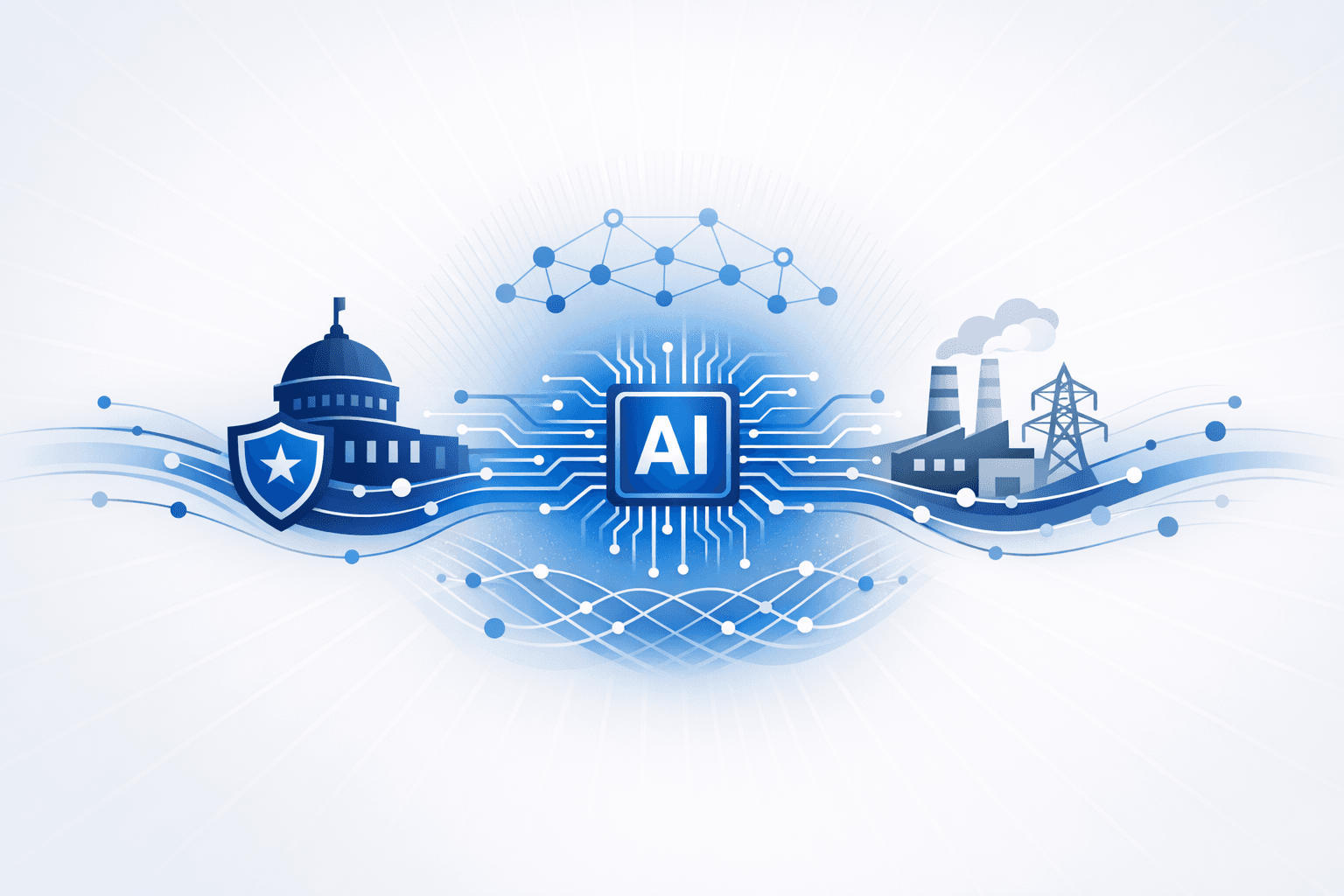
US cybersecurity officials said work is underway to stand up new and expanded government–industry mechanisms for sharing threat intelligence, with a particular focus on AI security and operational technology (OT) risks to critical infrastructure. CISA executive assistant director Nick Andersen said an AI Information-Sharing and Analysis Center (AI-ISAC) ordered by the White House is still in an “ongoing policy dialogue” phase, with stakeholders trying to resource the effort and avoid duplicating existing private-sector information-sharing initiatives; he also said there is no launch timeline and described the effort as moving through a “pre-decisional” process. In parallel, Andersen said DHS/CISA is planning a replacement for the disbanded Critical Infrastructure Partnership Advisory Council (CIPAC), aiming to correct gaps in the prior structure—particularly the lack of an explicit cybersecurity charter—and to enable more targeted focus groups on issues such as undersea cables and OT systems.
Separately, the White House Office of the National Cyber Director said it is developing an AI security policy framework intended to embed security controls into AI “tech stacks” in coordination with the Office of Science and Technology Policy, citing risks such as data poisoning and the potential for agentic capabilities to accelerate intrusions. In the private sector, the Manufacturing ISAC (MFG-ISAC) reported increased collaboration to address rising threats to manufacturing, including OT-focused initiatives such as tabletop exercises, OT training, and development of incident response playbooks and OT threat guidelines, alongside preparation for updated CMMC requirements—reinforcing the broader push toward structured, sector-based information sharing and readiness for critical-infrastructure cyber threats.
Why it matters
Impact assessment
This story does not describe a new compromise or vulnerability; it describes expansion of U.S. government and industry cyber information-sharing mechanisms for critical infrastructure and AI security. The primary impact is strategic: critical infrastructure operators, OT-heavy sectors, and organizations building or deploying AI systems may gain improved access to threat intelligence, vulnerability coordination, and incident support, which can reduce operational and cyber risk over time.
Summary
Affected entities include critical infrastructure owners and operators across sectors such as water, power, internet, telecommunications, manufacturing, and other OT-dependent environments, as well as AI ecosystem participants. Severity is indirect rather than immediate: there is no reported data loss or outage tied to this story, but the absence or restoration of these coordination channels materially affects preparedness, resilience, and response quality. Scope is broad across U.S. critical infrastructure and government-industry partners, with no confirmed exploitation event in the wild tied specifically to the announcement.
Supporting details
- DHS is re-establishing a formal cyber information-sharing mechanism for critical infrastructure through ANCHOR-CI.
- ANCHOR-CI replaces functions previously handled by CIPAC.
- CISA will manage ANCHOR-CI.
- ANCHOR-CI is intended to restore access to federally enabled threat intelligence and cybersecurity support for critical infrastructure stakeholders.
- The program will include sector-specific, cross-sector, industry, and regional coordinating councils.
- Cross-sector councils are intended to address emerging threats including cyberattacks and zero-day vulnerabilities.
- CISA officials said the prior CIPAC structure lacked an explicit cybersecurity charter and did not adequately support focused OT and undersea-cable discussions.
- Manufacturing sector collaboration is increasing through MFG-ISAC activities including OT tabletop exercises, OT training, incident response playbooks, and OT threat guidance.
- The White House and CISA are also pursuing an AI-ISAC and an AI security policy framework, indicating broader institutional focus on AI-related cyber risk.
- Known incidents referenced in the reporting are contextual only: Anthropic previously said suspected Chinese hackers used its AI tool to automate 80%–90% of a hacking operation targeting about 30 organizations worldwide. That incident is not presented as directly related to ANCHOR-CI or the new policy mechanisms.