OpenClaw AI Agent Exposures and One-Click RCE via WebSocket Hijacking
Emerging Technology Risk · 74 sources · Updated 3mo ago · First seen Feb 2, 2026
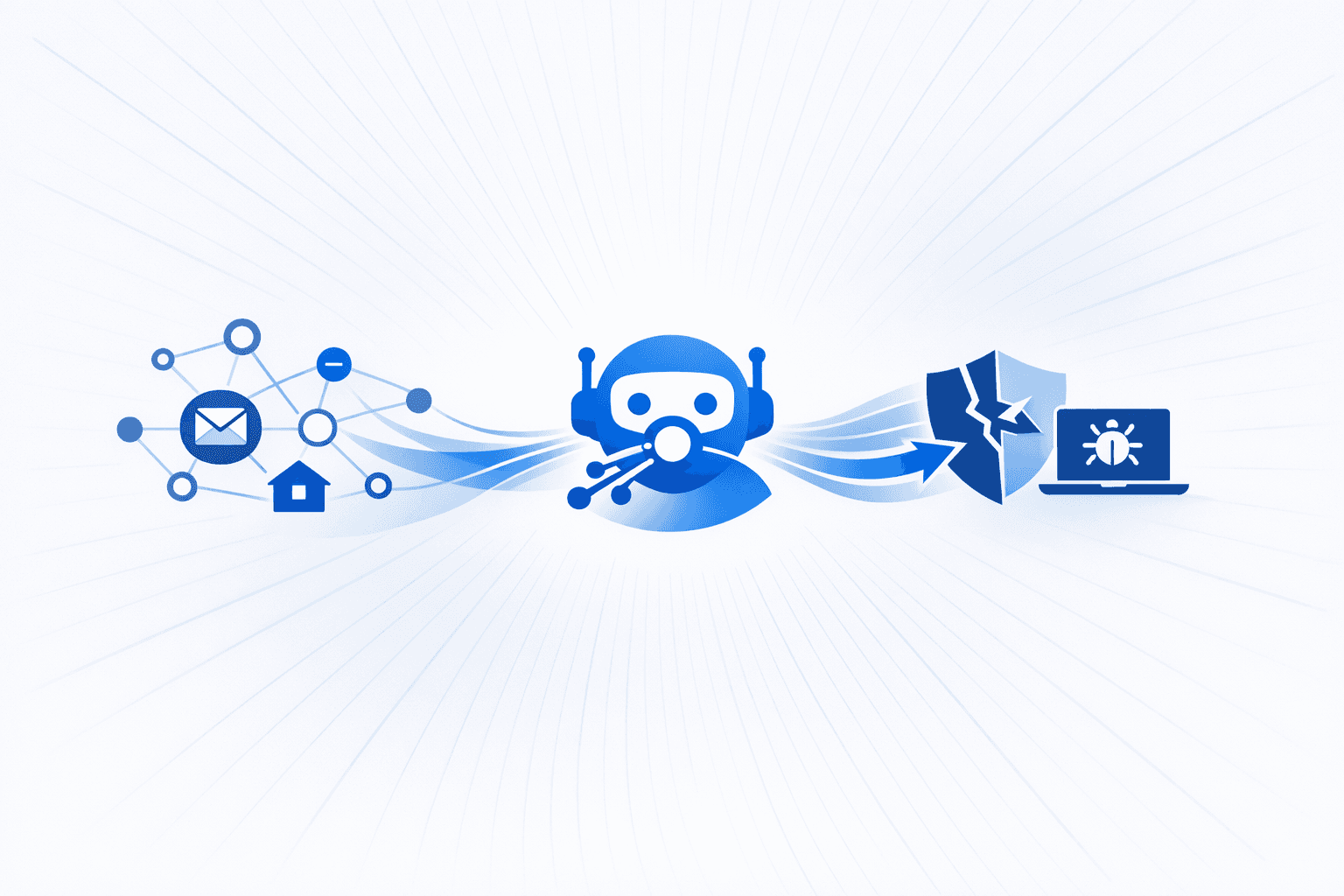
The open-source autonomous AI assistant OpenClaw (previously Clawdbot and Moltbot) is drawing security scrutiny after rapid adoption coincided with both widespread unsafe deployments and newly disclosed exploit chains. Reporting highlighted that the project’s autonomy-focused design (integrations with email, calendars, smart-home services, and other action-taking connectors) increases blast radius when misconfigured, and that security concerns have persisted through multiple rebrands as the ecosystem grows quickly.
Internet scanning data indicated 21,000+ OpenClaw/Moltbot instances were publicly exposed despite documentation recommending local-only access (default TCP/18789) and remote access via SSH tunneling rather than direct internet exposure; even where tokens are required for full access, exposed endpoints can aid adversary reconnaissance and targeting. Separately, researchers disclosed a one-click RCE chain leveraging cross-site WebSocket hijacking due to missing WebSocket Origin validation, enabling a malicious webpage to obtain an auth token, connect to the OpenClaw server, disable safety prompts/sandboxing, and invoke command execution (e.g., via node.invoke); the project issued a patch and advisory, while adjacent ecosystem components (e.g., agent-focused social features) were also flagged as adding additional attack surface.
Why it matters
Impact assessment
OpenClaw presents a high-risk exposure profile for enterprises and individual users because it combines broad local privileges, SaaS integrations, and autonomous action-taking with repeated insecure deployment patterns and multiple critical vulnerabilities. Affected organizations include any environment running OpenClaw or its earlier names Clawdbot/Moltbot, especially deployments exposed on the public internet or connected to sensitive business systems such as email, calendars, filesystems, chat platforms, and cloud services.
The impact ranges from credential theft and sensitive data exposure to owner-level takeover, persistent host compromise, and remote command execution. Exposure is widespread rather than narrowly targeted: reporting cites 21,639 publicly exposed instances as of January 31, 2026, and later estimates of roughly 245,000 publicly reachable servers from Shodan and ZoomEye scans; multiple reports also describe exploit paths requiring only a victim visit to a malicious webpage. Public reporting describes real-world attack feasibility and unsafe ecosystem conditions, but the provided references do not confirm a named in-the-wild exploitation campaign for the specific patched CVEs.
Supporting facts
- Affected product names: OpenClaw, formerly Clawdbot and Moltbot.
- Public exposure:
- Censys reported 21,639 exposed instances on January 31, 2026.
- Cyera estimated roughly 245,000 publicly reachable instances based on approximately 65,000 Shodan and 180,000 ZoomEye results.
- Default service exposure referenced on TCP/18789.
- High-risk user populations:
- Enterprises using OpenClaw for IT automation, customer service, messaging integrations, or privileged workflows.
- Users granting access to files, credentials, browser history, email, calendars, Slack, Google Workspace, smart-home services, and other connected systems.
- Sectors explicitly called out as elevated risk: financial services, healthcare, and legal.
- Business consequences described across references:
- Data exfiltration and credential leakage.
- Persistent backdoor installation on hosts.
- Privilege escalation to owner-level control.
- Operational disruption from unsafe rearchitecture and repair loops in April 2026.
- Reputational and fraud risk from adjacent ecosystem exposures such as Moltbook impersonation and token leakage.
- Exploitation status:
- One-click RCE and chainable compromise paths were publicly demonstrated and patched.
- References describe proof-of-concept exploitability and attacker-relevant reconnaissance at scale.
- No source here definitively attributes the cited CVEs to a named active exploitation campaign in the wild.