Warnings and Predictions of AI-Enabled Cyberattacks at Scale
Emerging Technology Risk · 6 sources · Updated 5mo ago · First seen Jan 23, 2026
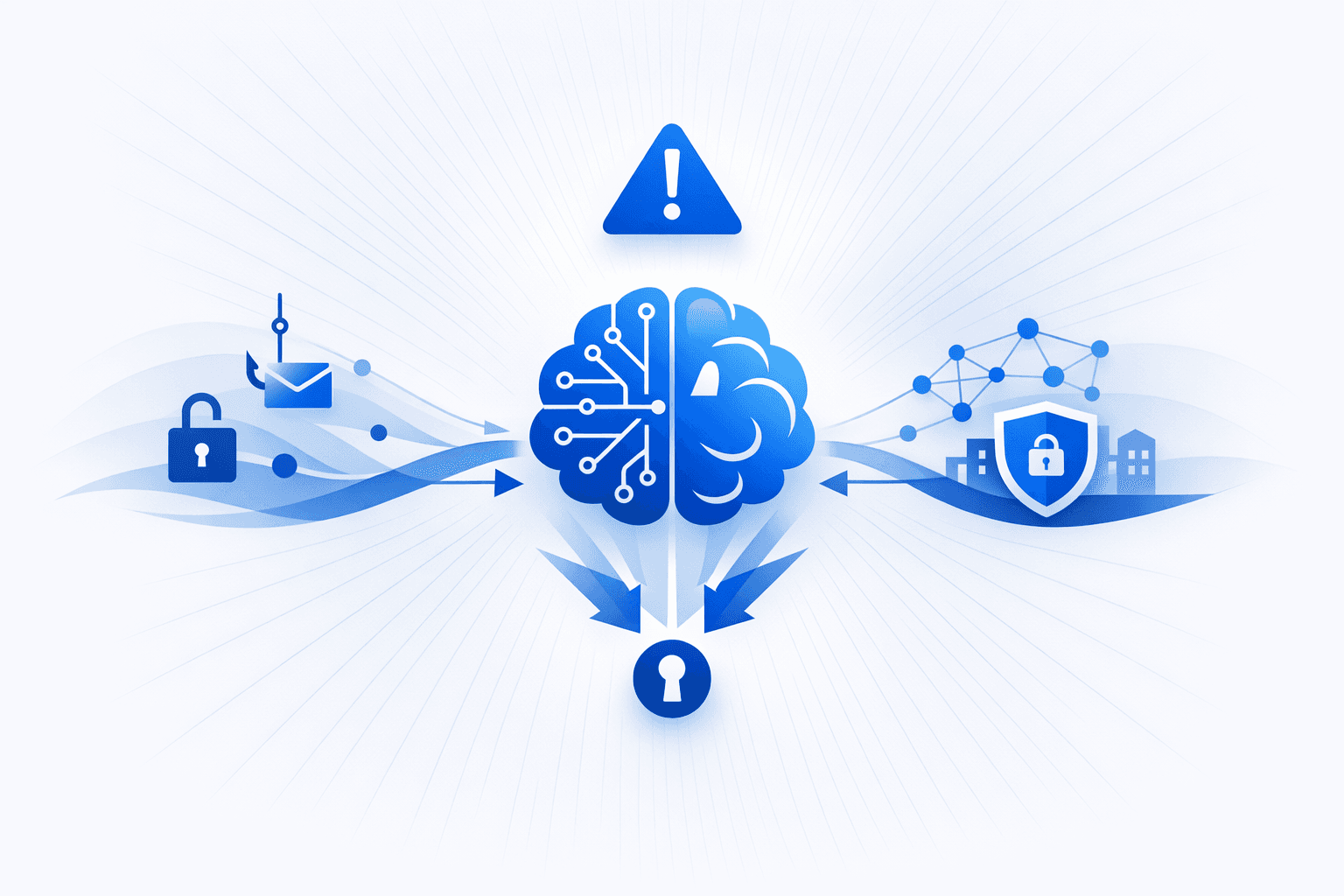
Google security leadership and Google Threat Intelligence Group (GTIG) warned that AI-enabled “end-to-end” attack toolkits—akin to today’s exploit kits but driven by LLMs—are likely to emerge, enabling cybercriminals to automate more of the intrusion lifecycle at scale. Google’s Heather Adkins highlighted current attacker use of AI for incremental workflow improvements (e.g., polishing phishing lures) and expressed concern about future capabilities where a model could be prompted to compromise a target and return actionable exploitation guidance (e.g., a “root prompt”) after extended autonomous work. GTIG also reported that some malware is already using LLMs to generate data-theft commands, and that state-linked actors from China, Iran, and North Korea are abusing AI across stages such as reconnaissance and command-and-control development.
Industry forecasts for 2026 similarly anticipate AI-driven attacks accelerating faster than many organizations’ governance and security tooling can keep up, including disruption to vulnerability management and security testing and the likelihood of early “major breaches” tied to AI adoption and agentic workflows. Predictions also point to continued evolution in extortion economics, with ransomware pressure shifting toward data-leak and regulatory/insurance uncertainty, increasing the need for resilience strategies that combine automation with human oversight. Overall, both perspectives converge on near-term attacker experimentation becoming more operationalized, while defenders are expected to respond with increased use of AI-driven scanning, predictive analytics, and improved detection/response automation.
Why it matters
Impact assessment
AI-enabled cyberattacks are presented here as an emerging cross-sector risk rather than a single discrete incident. The most exposed populations are government agencies, critical infrastructure operators, cloud/SaaS-heavy enterprises, and organizations deploying GenAI agents, AI browsers, or autonomous workflows; projected impacts include faster compromise, stealthier data theft, operational disruption, extortion pressure, and erosion of trust in decision-support data.
The scope described is broad and potentially widespread, but the reporting is largely predictive and trend-based rather than tied to one newly disclosed vulnerability. There are limited cited examples of apparent real-world activity, including GTIG observations of malware using LLM-generated data-theft commands, Anthropic-referenced AI-enabled espionage activity, and reported state-linked abuse by China-, Iran-, and North Korea-aligned actors.
Supporting details
- Affected industries and populations:
- Government and public sector, especially U.S. federal and state agencies
- Critical infrastructure, including energy grids and telecommunications
- Healthcare and emergency-sector organizations
- Cloud-first enterprises and SaaS-dependent organizations
- Organizations adopting AI agents, AI browsers, and agentic workflows
- Cryptocurrency organizations and defense contractors were cited as likely nation-state targets
- Severity themes:
- Increased phishing effectiveness through AI-generated text and voice deepfakes
- Faster reconnaissance, malware development, lateral movement, and campaign scaling
- Data theft and extortion shifting away from pure encryption toward leak/coercion models
- Potential operational disruption in OT/ICS and mission-critical environments
- Reputational and regulatory harm from data leakage, manipulated information, and governance failures
- Scope and exposure:
- Described as a broad strategic trend affecting many sectors, not a narrowly targeted product issue
- Particular concern for organizations with immature AI governance, over-permissioned agents, weak identity controls, and limited monitoring of browser-embedded AI activity
- Exploitation in the wild or cited incidents:
- GTIG reportedly observed malware families using LLMs to generate commands for data theft
- Anthropic-referenced activity allegedly involved AI-assisted cyberespionage with minimal human intervention
- State-linked actors from China, Iran, and North Korea were reported using AI for reconnaissance, phishing, C2 development, and attack automation
- Referenced campaigns/incidents include Salt Typhoon, GTG-2002, DPRK remote-worker infiltration, and OAuth-token-enabled SaaS data theft claims, though several claims are forecast-oriented or second-hand rather than independently validated in the story set