Browser-in-the-Browser Phishing Campaigns Targeting Facebook Credentials
Social Engineering & Fraud · 2 sources · Updated 5mo ago · First seen Jan 14, 2026
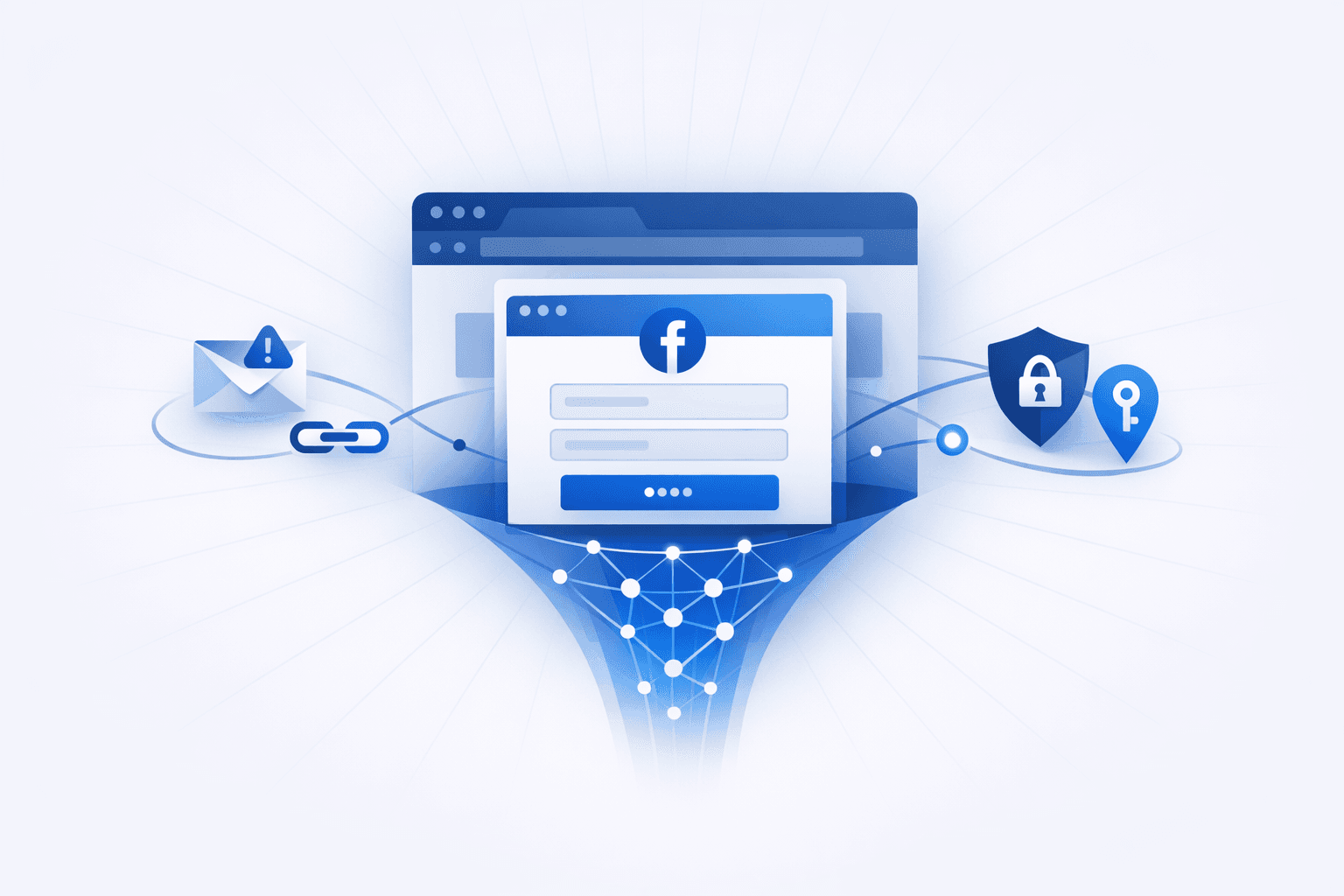
Threat actors have increasingly used the browser-in-the-browser (BitB) technique to steal Facebook credentials, leveraging fake in-browser pop-up login windows that closely mimic legitimate authentication flows. Trellix reported that recent campaigns commonly start with phishing emails impersonating law firms issuing copyright infringement warnings, threats of imminent account suspension, or Meta security alerts about suspicious logins; these lures often include shortened links and fake Meta CAPTCHA pages to add legitimacy before presenting the counterfeit login prompt.
Why it matters
Impact assessment
Browser-in-the-Browser phishing campaigns are targeting Facebook users at scale, especially individuals and businesses that rely on Facebook accounts for advertising, brand presence, customer engagement, or account administration. The immediate impact is account takeover and theft of personal information, with downstream risk of scam propagation, identity fraud, reputational damage, and loss of access to business-managed social assets.
The exposure appears broad rather than narrowly targeted, with multiple threat actors using common lures over at least the past six months. There is no CVE or software flaw involved; the risk comes from effective social engineering and abuse of trusted hosting platforms and URL shorteners, and the reporting indicates active exploitation in the wild.
Supporting facts
- Targeted platform: Facebook accounts.
- Affected populations: individual Facebook users, page administrators, advertisers, and organizations using Facebook for business operations.
- Observed outcomes: credential theft, personal information harvesting, scam distribution, and identity fraud.
- Scope: multiple campaigns by multiple threat actors over the last six months.
- Delivery themes: copyright infringement notices, imminent account suspension warnings, and Meta security alerts about suspicious or unauthorized logins.
- Infrastructure abuse increases reach and trust: phishing pages hosted on Netlify and Vercel; shortened URLs used in email lures.