AI Agents and Non-Human Identities as Emerging Cybersecurity Risks
Emerging Technology Risk · 8 sources · Updated 5mo ago · First seen Jan 7, 2026
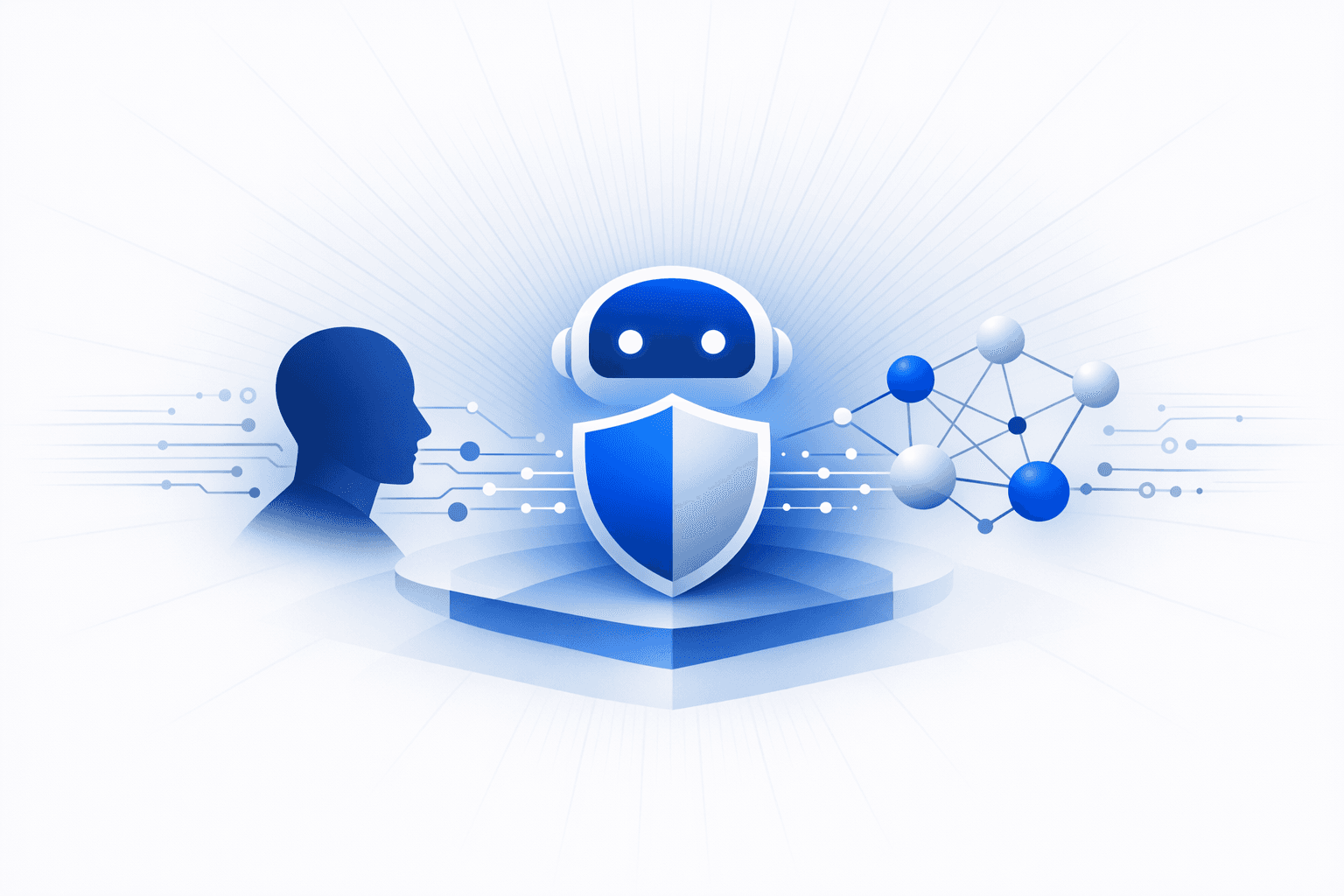
The rapid adoption of AI agents, bots, and other non-human identities (NHIs) is fundamentally reshaping the cybersecurity landscape, introducing new attack surfaces and operational challenges for enterprises. As organizations increasingly rely on automation and AI-driven processes, NHIs are being granted broad access to critical systems, often without the same oversight or security controls applied to human users. This shift has led to heightened risks such as over-permissioned accounts, static credentials, and insufficient monitoring, making NHIs attractive targets for cybercriminals seeking to exploit gaps in identity and access management (IAM). Security leaders are urged to implement zero-trust principles, least-privilege access, automated credential rotation, and robust secrets management to mitigate these risks and prevent privileged account compromise.
The complexity of managing AI agents is further compounded by the need for effective governance and the challenge of balancing control with operational simplicity in security operations centers (SOCs). Experts emphasize that adversaries are increasingly "logging in, not breaking in," leveraging weaknesses in identity controls—especially those related to AI agents—to gain unauthorized access. The cybersecurity workforce must adapt, as AI-driven automation is expected to take over high-volume, repetitive tasks, requiring new skills in AI security and orchestration. Organizations are advised to treat every human, workload, and agent as a managed identity, enforce phishing-resistant multi-factor authentication, and continuously monitor for anomalous permission changes or session hijacking to stay ahead of evolving threats.
Why it matters
Impact assessment
AI agents, bots, service accounts, and other non-human identities are becoming a material enterprise risk across cloud, CI/CD, IAM, SOC, healthcare, finance, IT, manufacturing, retail, logistics, and IoT-heavy environments. The primary impact is unauthorized access, data leakage, privileged account compromise, operational disruption, and increased breach cost when machine identities are over-permissioned, poorly governed, or monitored less rigorously than human users.
This is a broad exposure trend rather than a single-product incident. Multiple references cite real-world abuse and measurable harm, including an Anthropic-detected AI-orchestrated espionage campaign in September 2025, a healthcare AI agent compromise that reportedly caused a $14 million loss after leaking patient records for three months, and prompt-injection-driven chatbot data leaks; Gartner also projects that by 2028, 25% of breaches will be traced to AI agent abuse.
Supporting facts
- Affected identity types: bots, AI agents, service accounts, automation scripts, workloads, API tokens.
- Affected environments: cloud infrastructure, multicloud, CI/CD pipelines, enterprise applications, SOC automation platforms, chatbots, OT-connected supply chains, IoT ecosystems.
- Industries specifically referenced: healthcare, IT, financial services, manufacturing, retail, logistics.
- Reported scale indicators:
- 88% of organizations use AI in at least one function.
- Non-human users significantly outnumber human users in cloud environments.
- Over 30 billion IoT devices are projected worldwide by 2025, expanding the machine-identity attack surface.
- Severity indicators:
- Healthcare AI agent incident reportedly caused $14 million in losses.
- Shadow AI breaches cost an average of $670,000 more than traditional incidents.
- IBM reported 13% of organizations experienced breaches involving AI models or applications.
- IBM reported 97% of organizations lack proper AI access controls.
- Known exploitation and abuse in the wild:
- Anthropic detected and disrupted an AI-orchestrated espionage campaign in September 2025.
- Prompt injection attacks on chatbots have resulted in customer data leaks.
- Attackers are increasingly described as “logging in, not breaking in,” emphasizing identity abuse over exploit-driven intrusion.
- Operational risk amplifiers:
- NHI access is rarely reviewed or revoked after provisioning.
- Static credentials and hardcoded secrets create persistent compromise paths.
- Limited logging and monitoring of NHIs increases dwell time and reduces detection likelihood.