US Approval of Nvidia H200 AI Chip Exports to China Under Strict Controls
Regulatory & Policy · 5 sources · Updated 5mo ago · First seen Dec 10, 2025
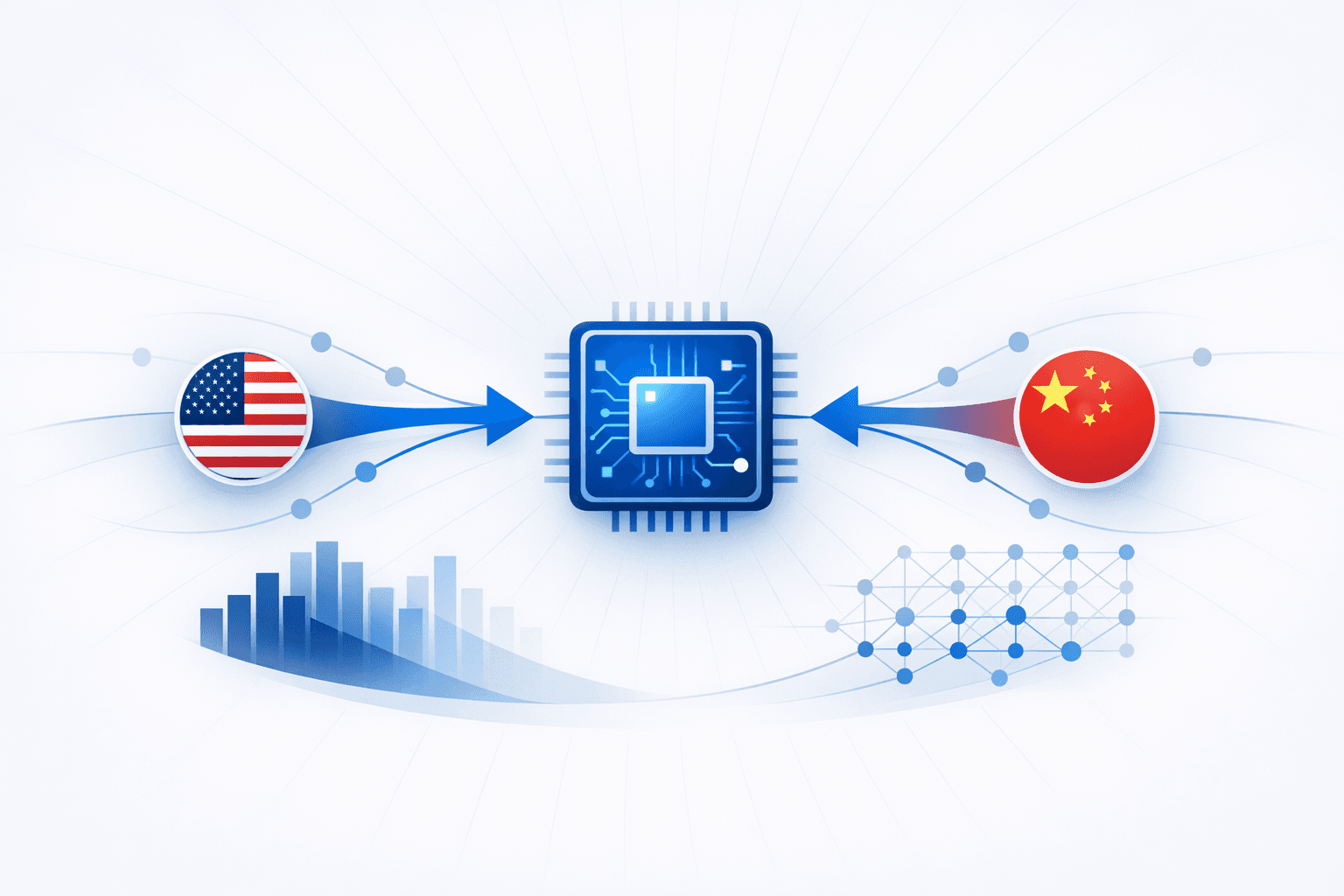
The United States government has authorized Nvidia to export its H200 AI accelerator chips to select Chinese customers, reversing previous restrictions that had barred such sales. The decision, announced by President Donald Trump, requires each chip to be routed through US territory for inspection and imposes a 25% import duty. The move is intended to maintain US technological superiority while allowing controlled access to advanced AI hardware, as the H200 is significantly more powerful than the previously permitted H20 model but still less advanced than Nvidia's latest Blackwell chips, which remain restricted. The policy shift follows concerns that strict export bans were accelerating the development of domestic Chinese alternatives, particularly from companies like Huawei, whose Ascend 910C and CloudMatrix 384 chips are approaching parity with Nvidia's offerings.
Chinese regulators have responded by convening emergency meetings with major technology firms such as Alibaba, ByteDance, and Tencent to assess demand for the H200 and consider potential import limits. The Chinese government is weighing whether to permit purchases and how to structure access, with discussions reportedly focusing on restricting public sector use and requiring justification for why domestic chips cannot meet company needs. The US administration's strategy aims to keep Chinese industry reliant on American technology and secure revenue for Nvidia, which has seen its China market share plummet due to earlier restrictions. The decision is seen as a calculated effort to balance national security concerns with economic interests and the ongoing competition in AI hardware development between the US and China.
Why it matters
Impact assessment
This is a geopolitical and supply-chain policy development, not a newly disclosed cyber incident or software vulnerability. The directly affected parties are AI infrastructure providers, semiconductor vendors, hyperscalers, and large Chinese technology firms that rely on Nvidia accelerators for model training, with secondary impact to organizations dependent on cross-border AI compute supply chains.
The primary impact is strategic and operational: changes in export controls, inspection requirements, tariffs, and possible location-verification measures could disrupt procurement, deployment timelines, compliance obligations, and vendor selection. Exposure appears limited to approved buyers and tightly controlled hardware flows rather than broad end-user populations, and the references do not describe confirmed cyber exploitation in the wild.
Supporting details
- Affected entities named in reporting:
- Nvidia
- TSMC
- Huawei
- Alibaba
- ByteDance
- Tencent
- SuperCloud
- U.S. Commerce Department
- U.S. Justice Department
- National Development and Reform Commission of China
- Ministry of Industry and Information Technology of China
- Cyberspace Administration of China
- Affected products and platforms:
- Nvidia H200 AI accelerator
- Nvidia H20
- Nvidia H100 and A100
- Nvidia Blackwell B100/B200
- Huawei Ascend 910C
- Huawei CloudMatrix 384
- Cambricon Siyuan series
- Business and operational effects:
- H200 exports to China are allowed only for approved customers under strict controls.
- Each chip must transit through the U.S. for inspection and incur a 25% duty/fee before re-export.
- Chinese regulators are considering additional import limits, caps tied to domestic accelerator purchases, and possible restrictions on public-sector or sensitive-sector use.
- Nvidia reportedly lost most or all China market share under prior restrictions, indicating significant supply-chain and revenue disruption.
- Scope and severity:
- Scope is targeted to advanced AI hardware procurement and compliance programs, not a mass cyber exposure.
- Potential operational disruption includes delayed shipments, constrained supply, and compliance overhead from tracking and location verification.
- Reputational and regulatory risk exists for firms using foreign accelerators in sensitive sectors such as finance and energy.
- Exploitation status:
- No software exploitation or intrusion campaign is described.
- References note prior smuggling of banned Nvidia GPUs into China and a DOJ enforcement effort, but no new compromise activity is detailed in this story.