OpenAI Codex CLI Command Injection Vulnerability
Emerging Technology Risk · 3 sources · Updated 5mo ago · First seen Dec 3, 2025
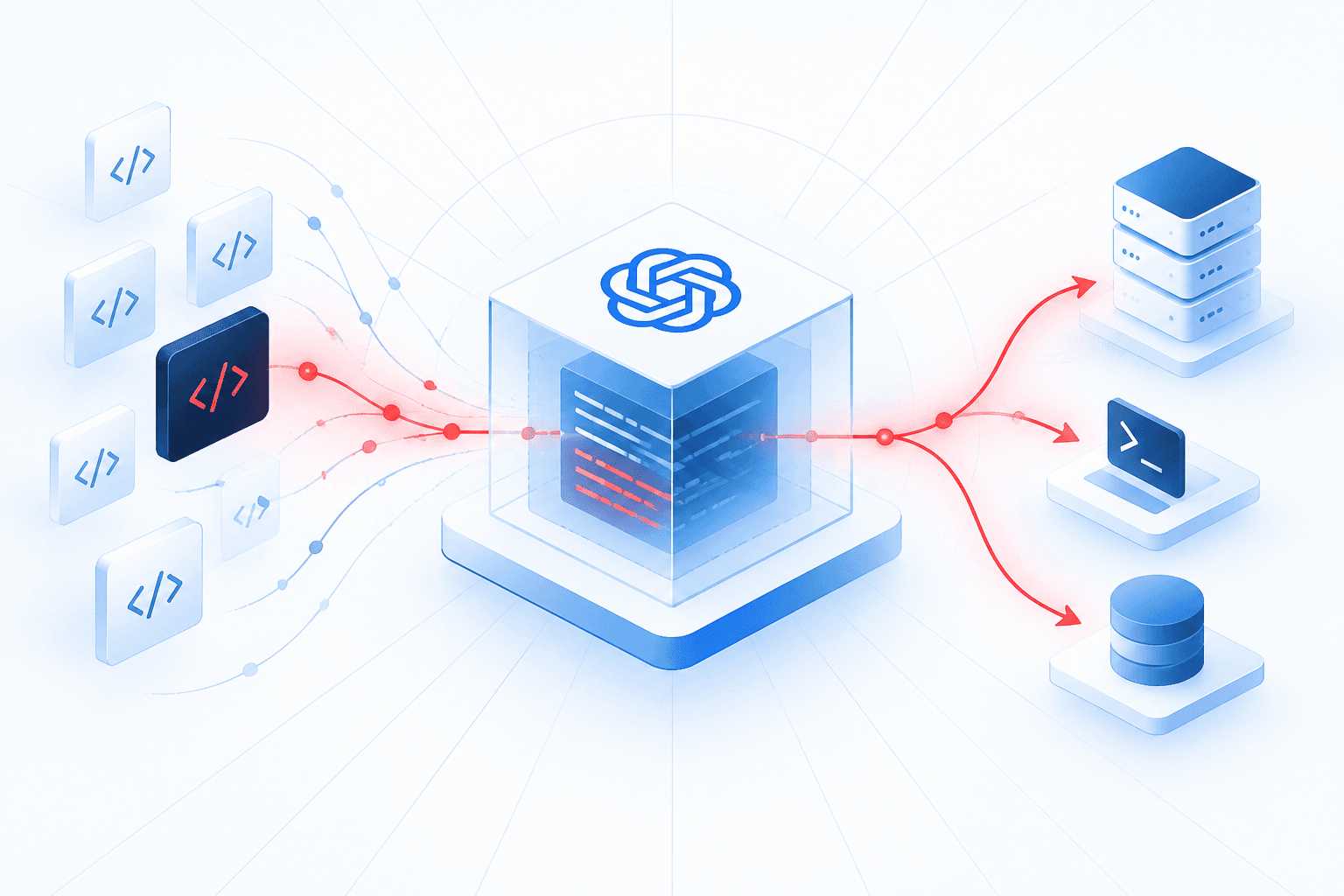
OpenAI addressed a critical command-injection vulnerability in its Codex CLI tool that allowed attackers to execute arbitrary commands on developer machines by hiding malicious configuration files within code repositories. The flaw, disclosed by Check Point and patched in Codex CLI version 0.23.0, exploited the way the tool automatically loaded and executed MCP server entries from project-local configuration files. If a repository contained a file that redirected the configuration directory and included a malicious MCP server command, Codex CLI would execute those commands as soon as a developer ran the Codex command, potentially compromising the system.
This vulnerability turned routine developer workflows into attack vectors, as simply running Codex CLI in a tampered repository could result in the execution of hidden commands without the user's knowledge. OpenAI released a fix for the issue after being notified by Check Point, mitigating the risk of attackers hijacking developer machines through this vector. Security teams are advised to ensure all Codex CLI installations are updated to the latest version and to review repository sources before running AI-powered development tools.
Why it matters
Impact assessment
CVE-2025-61260 affects organizations using OpenAI Codex CLI in developer workstations, engineering laptops, CI runners, and build agents. The impact is severe because a malicious repository or accepted pull request could trigger arbitrary command execution during normal developer workflows, exposing source code, SSH keys, cloud credentials, and potentially contaminating downstream build and deployment pipelines.
The exposure is broad across software development environments that use Codex CLI, but exploitation requires repository write access, pull request acceptance, or another path to place malicious project files in a trusted codebase. The story describes researcher-demonstrated exploitation, including reverse shell payloads and persistence mechanisms, but does not provide confirmed in-the-wild exploitation.
Supporting facts
- Affected product: OpenAI Codex CLI.
- Fixed version: 0.23.0.
- Affected users: developers, DevOps teams, CI/CD operators, and organizations using AI-assisted coding workflows.
- Primary impact: arbitrary command execution on developer machines.
- Secondary impact: theft of cloud credentials, SSH keys, and source code.
- Supply chain risk: compromised repositories or templates could propagate malicious behavior to downstream consumers.
- Operational risk: CI systems or build agents running Codex could embed compromise into build artifacts or production deployments.
- Exploitation status: proof-of-concept exploitation was demonstrated by Check Point; no confirmed active exploitation is stated in the references.
- Relevant entities: OpenAI, Check Point Research, Noma Security, Bugcrowd.
- Similar ecosystem concerns noted: Cursor and Google's Antigravity IDE were cited as having comparable security patterns or issues.