UK Cyber Security and Resilience Bill Expands Critical Infrastructure Protections
Regulatory & Policy · 10 sources · Updated 5mo ago · First seen Nov 12, 2025
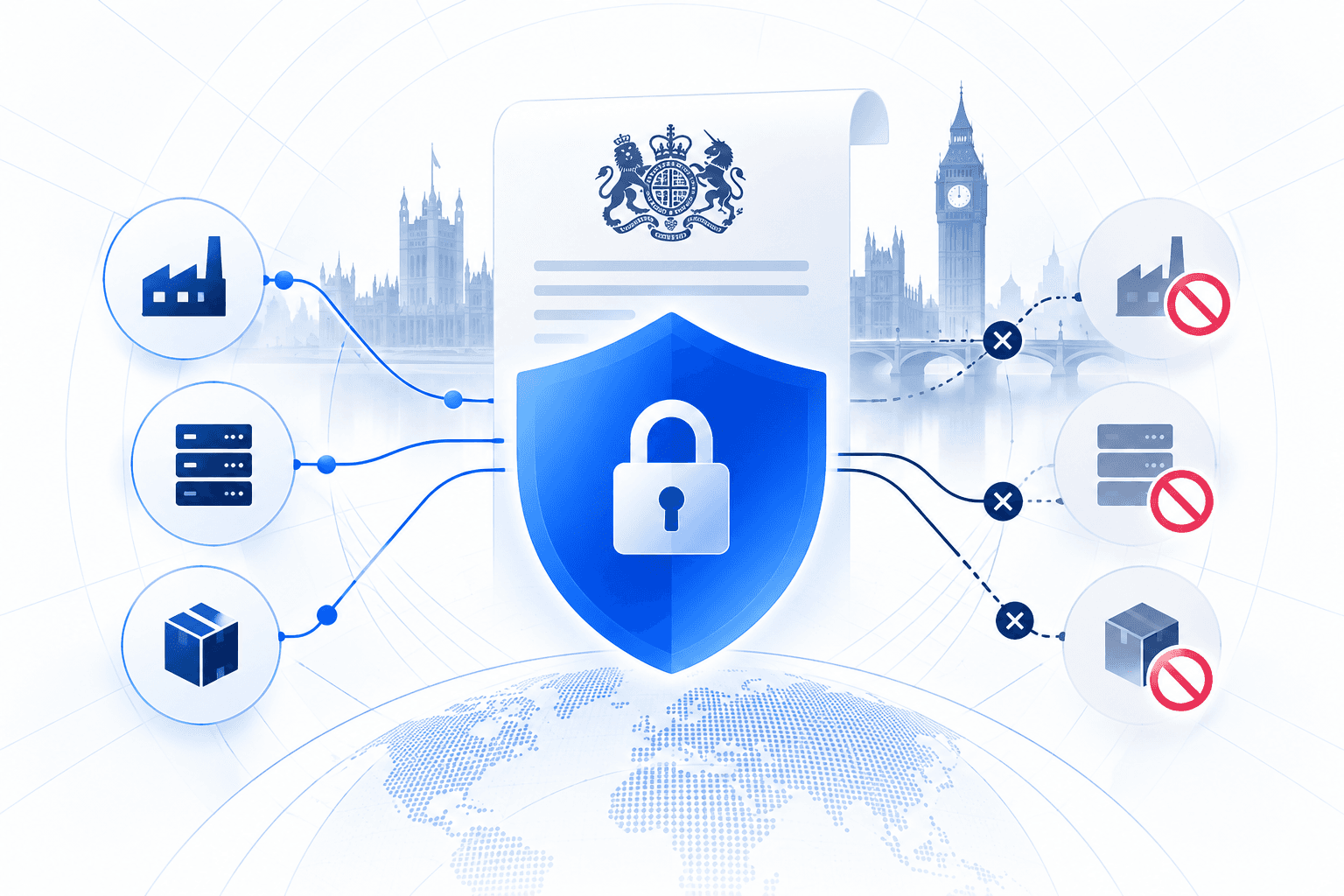
The UK government has introduced the Cyber Security and Resilience (CSR) Bill to Parliament, representing a major update to national cybersecurity legislation. The bill expands the scope of regulated entities to include datacenters and managed service providers (MSPs), in addition to existing coverage of operators of essential services such as healthcare, energy, transport, water, and digital service providers. The legislation aims to ensure these sectors meet robust cybersecurity standards, with new rules also extending to organizations overseeing smart appliances like electric vehicle charging points and smart heating systems.
The CSR Bill grants ministers emergency powers to intervene during major cyber incidents and imposes stricter compliance requirements, including mandatory reporting of significant cyber incidents within 24 hours. Non-compliant organizations face substantial penalties, including daily fines up to £100,000 or turnover-based penalties, marking a shift toward enforcement that scales with organizational impact. The bill is expected to receive Royal Assent in 2026 and is positioned as a key component of the UK’s strategy to strengthen national resilience and protect critical infrastructure from evolving cyber threats.
Why it matters
Impact assessment
The UK Cyber Security and Resilience Bill materially expands regulatory exposure for organizations operating UK critical infrastructure and supporting digital ecosystems, especially data centers, managed service providers, key suppliers, and operators of smart grid-adjacent systems. The primary impact is compliance, reporting, and governance burden rather than a newly disclosed technical exploit, but the financial and operational consequences are significant due to 24-hour reporting obligations, regulator intervention powers, and penalties up to £100,000 per day or turnover-based fines.
The scope is broad and likely to grow as secondary legislation defines detailed requirements, with references indicating the number of regulated entities could increase substantially compared with prior NIS 2018 coverage. There are no new exploitation details in the story itself, but the bill is explicitly framed as a response to real-world disruptive incidents in the UK, including Synnovis, the British Library, Ministry of Defence payroll exposure, Marks & Spencer, and Jaguar Land Rover.
Affected entities
- UK operators of essential services: healthcare, energy, transport, water, and digital services
- Newly in-scope digital infrastructure providers: data centers
- Managed service providers and certain IT service companies
- Critical suppliers and supply-chain entities designated by regulators
- Operators of smart infrastructure, including EV charging networks, smart heating systems, and industrial demand aggregators
- Organizations with UK operations that already align to or report under NIS2 may face partial harmonization benefits but still need UK-specific review
Severity and business consequences
- Increased legal and regulatory exposure from mandatory incident reporting and regulator inspections
- Potential operational disruption from emergency government intervention during major cyber incidents, including enhanced monitoring or temporary network isolation
- Financial impact from daily fines up to £100,000 and turnover-based penalties
- Increased compliance costs; one cited estimate places business implementation costs up to £590 million overall
- Leadership accountability and reputational risk increase due to stricter transparency and reporting expectations
Scope and timing
- Broad national scope across UK critical infrastructure and digital dependency chains
- Enforcement is expected after passage, Royal Assent, and grace periods; references indicate Royal Assent in 2026 and enforcement beginning in 2027
- Detailed technical and control requirements are not yet fully defined and are expected through secondary legislation and guidance
Structured facts extracted
- Entity: UK Cyber Security and Resilience Bill / CSRB / CSR Bill
- Entity: UK Department for Science, Innovation and Technology (DSIT)
- Entity: National Cyber Security Centre (NCSC)
- Entity: UK Parliament
- Entity: James Morris, chairman of CSBR
- Frameworks referenced: UK NIS Regulations 2018, EU NIS2, UK Cyber Assessment Framework, Belgium Cyber Fundamentals (CyFun)
- Incident examples cited as policy drivers: Synnovis, British Library, Ministry of Defence payroll breach, Marks & Spencer, Jaguar Land Rover, SolarWinds supply-chain attack
- Economic figures cited: UK cyberattacks estimated at £14.7 billion annually; major critical infrastructure cyberattack could increase UK borrowing by over £30 billion