AI-Driven Identity Impersonation and Cybercrime Tactics
Social Engineering & Fraud · 2 sources · Updated 5mo ago · First seen Oct 29, 2025
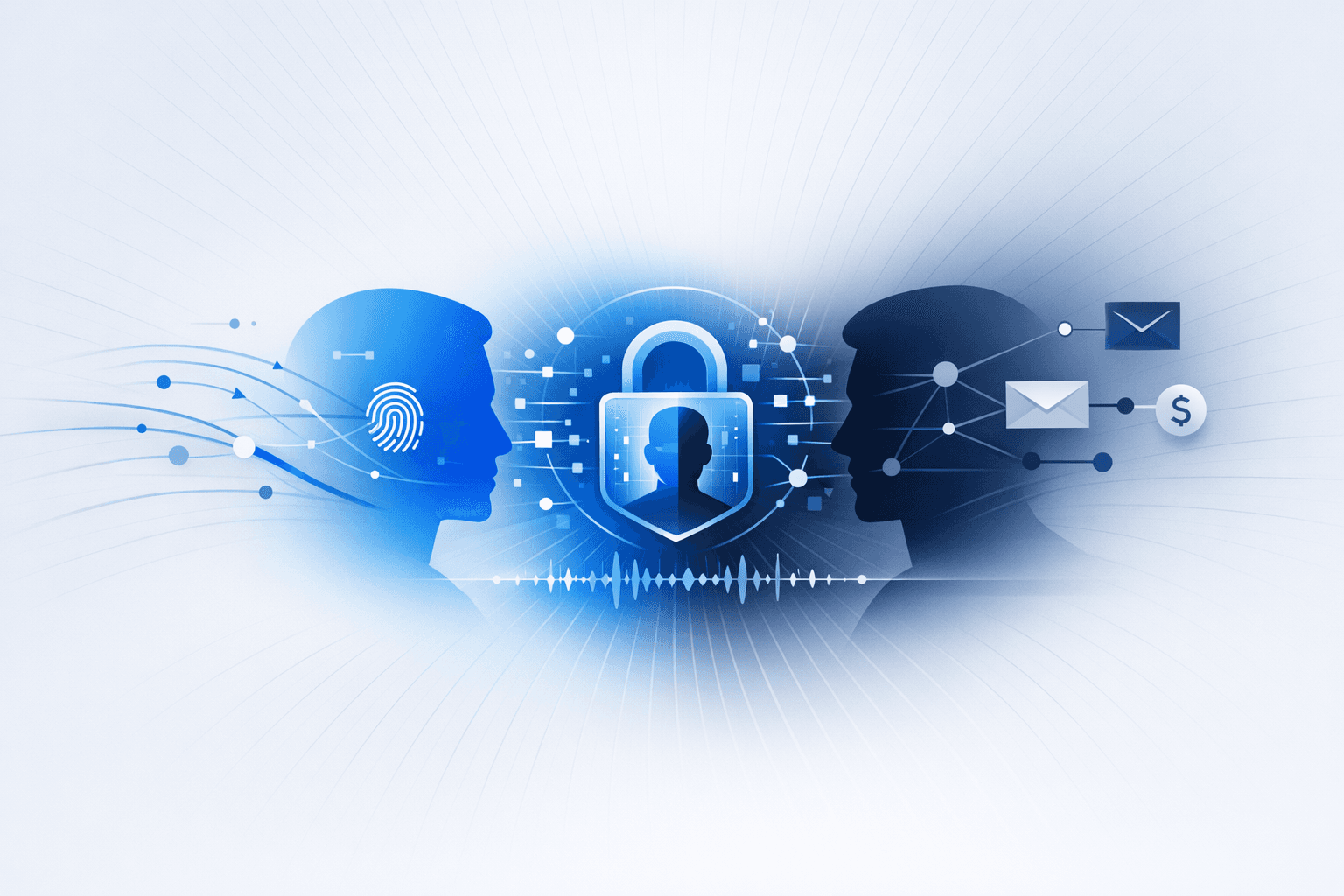
Cybercriminals are increasingly leveraging artificial intelligence to automate and enhance identity impersonation, making traditional security measures less effective. Attackers now use AI-generated voice messages and deepfakes to convincingly mimic executives and employees, enabling sophisticated business email compromise schemes and fraudulent financial transactions. The widespread availability of generative AI tools, combined with vast amounts of personal data from previous breaches, allows threat actors to craft highly personalized phishing messages and social engineering attacks that reference real company projects and colleagues, significantly lowering the barrier to entry for such operations.
Security experts warn that AI-driven attacks are fundamentally changing the threat landscape, with phishing attempts becoming nearly impossible to detect and self-evolving malware presenting new challenges for defenders. The rise of digital doppelgangers and AI-powered adversaries underscores the urgent need for organizations to adopt zero-trust security models and advanced identity verification techniques, as conventional employee training and perimeter defenses are no longer sufficient to counter these evolving threats.
Why it matters
Impact assessment
AI-enabled impersonation materially increases risk for organizations that rely on human trust, email approvals, voice verification, and push-based MFA. The most exposed populations are finance, executive leadership, legal, HR, help desk, and any staff with authority over payments, credential resets, or sensitive data access.
The likely impact includes fraudulent wire transfers, account takeover, data theft, and reputational damage from successful business email compromise and social engineering. Exposure is broad rather than sector-specific because the tactics rely on widely available generative AI tools and breached/public personal data; the story describes these capabilities as operational today, but does not cite a specific named intrusion set or victim incident.
Supporting details
- Affected attack surfaces: email, SMS, voice calls, voicemail, collaboration workflows, identity verification processes.
- High-risk business processes: wire transfer approval, password reset, MFA approval, vendor payment changes, executive requests, legal/HR document handling.
- Scope: widespread exposure across enterprises using standard identity and communication channels.
- Known in-the-wild activity described: AI-generated voice messages used in business email compromise to authorize fraudulent wire transfers.
- Defensive implication: traditional awareness training and perimeter-centric controls are less effective when attackers can convincingly mimic trusted identities and recent conversational context.