Supply Chain Attacks and Remote Access Trojans Targeting NPM Ecosystem and Banking Sector
Supply Chain Risk · 2 sources · Updated 5mo ago · First seen Oct 22, 2025
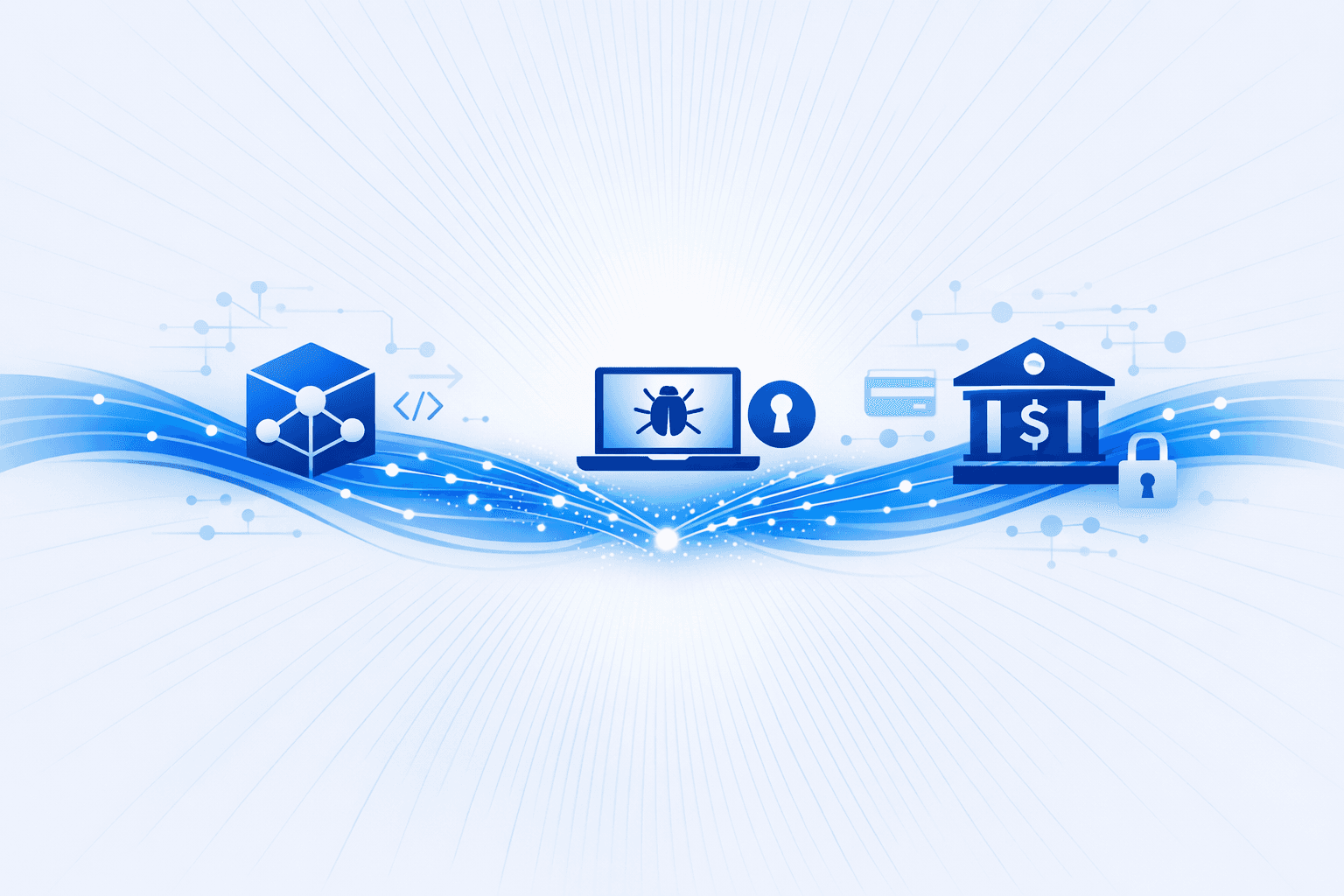
A series of sophisticated supply chain attacks have targeted the NPM ecosystem, compromising both widely used and niche packages to deliver malicious payloads. The "Shai-Hulud" campaign has infected at least 187 NPM packages, including the highly popular tinycolor package, which receives approximately 2 million downloads weekly. Attackers in this campaign modify package manifests, inject malicious files, and republish the compromised packages, resulting in downstream projects unknowingly incorporating malicious code. The worm-like nature of the attack allows it to spread rapidly to other maintainers' packages, amplifying the impact across the software supply chain. Delayed detection of these compromises increases the risk, as many projects may already be affected before the breach is discovered. The attack highlights the critical importance of verifying package signatures and maintaining a robust software bill of materials (SBOM) to trace dependencies and versions accurately. In a related but distinct campaign, a threat actor using the NPM account "ongtrieuhau861.001" has published at least 94 malicious packages, many of which are specifically crafted to target Asian banks. These packages, often named with the pattern "dhhdbankxxxxx" and similar variants, deliver a JavaScript-based Remote Access Trojan (RAT) dubbed "DHSollutionsBot." This RAT leverages Firebase Realtime Database for command and control, while exfiltrating stolen data through Discord webhooks, making detection more challenging due to the use of legitimate cloud services. The threat actor's NPM account history suggests either a long-term operation or the acquisition of an existing account for malicious purposes. The attack architecture is notable for its simplicity and effectiveness, combining two legitimate platforms for resilient and stealthy C2 operations. Both campaigns underscore the growing threat of supply chain attacks in the open-source ecosystem, where a single compromised package can have cascading effects on countless downstream projects. Developers and organizations are urged to implement cryptographic signing of packages, verify signatures before use, and maintain detailed SBOMs to mitigate the risk of such attacks. The incidents also demonstrate the need for continuous monitoring of package repositories and automated detection tools to identify and respond to malicious activity promptly. The use of trusted platforms like Discord and Firebase for C2 communications further complicates detection and response efforts. These attacks serve as a stark reminder that even well-established codebases can become vectors for compromise if their dependencies are not rigorously vetted and monitored. The campaigns have prompted renewed calls for improved security practices in the software development lifecycle, particularly in the management of third-party dependencies. Organizations are advised to review their exposure to affected NPM packages and take immediate remediation steps where necessary. The incidents highlight the evolving tactics of threat actors in targeting the software supply chain and the critical need for industry-wide vigilance.
Why it matters
Impact assessment
These campaigns affect organizations that build, test, or deploy JavaScript/Node.js software with npm dependencies, as well as financial institutions and users exposed to banking-themed malicious packages. Impact ranges from software supply chain compromise in downstream applications to credential theft, CI/CD compromise, remote access, and data exfiltration, with potentially significant operational, financial, and reputational damage.
The scope is broad for the Shai-Hulud activity because it reportedly affected at least 187 npm packages, including tinycolor, a package cited as receiving about 2 million weekly downloads. The banking-focused DHSollutionsBot activity appears more targeted, with at least 94 malicious npm packages aimed at Asian banks, but still presents wider ecosystem risk because packages can be pulled into developer environments and internal tooling.
Supporting facts
- Shai-Hulud is described as a worm-style npm supply chain attack.
- At least 187 npm packages were reportedly compromised.
- The compromised set reportedly included tinycolor.
- tinycolor is cited as receiving approximately 2 million weekly downloads.
- The attack reportedly spread into other maintainers' packages, increasing downstream exposure.
- Delayed detection can allow dozens or hundreds of projects to ingest malicious dependencies before discovery.
- CI workflows and developer credentials may be hijacked as part of the exploit chain.
- A separate campaign reportedly used the npm account ongtrieuhau861.001 to publish at least 94 malicious packages.
- Many of those packages reportedly targeted Asian banks using names matching patterns such as dhhdbankxxxxx.
- The banking-focused packages delivered a JavaScript RAT called DHSollutionsBot.
- Use of legitimate services for command and control and exfiltration increases stealth and complicates response.
- The story describes active malicious package publication and downstream compromise, indicating real-world exploitation rather than purely theoretical exposure.