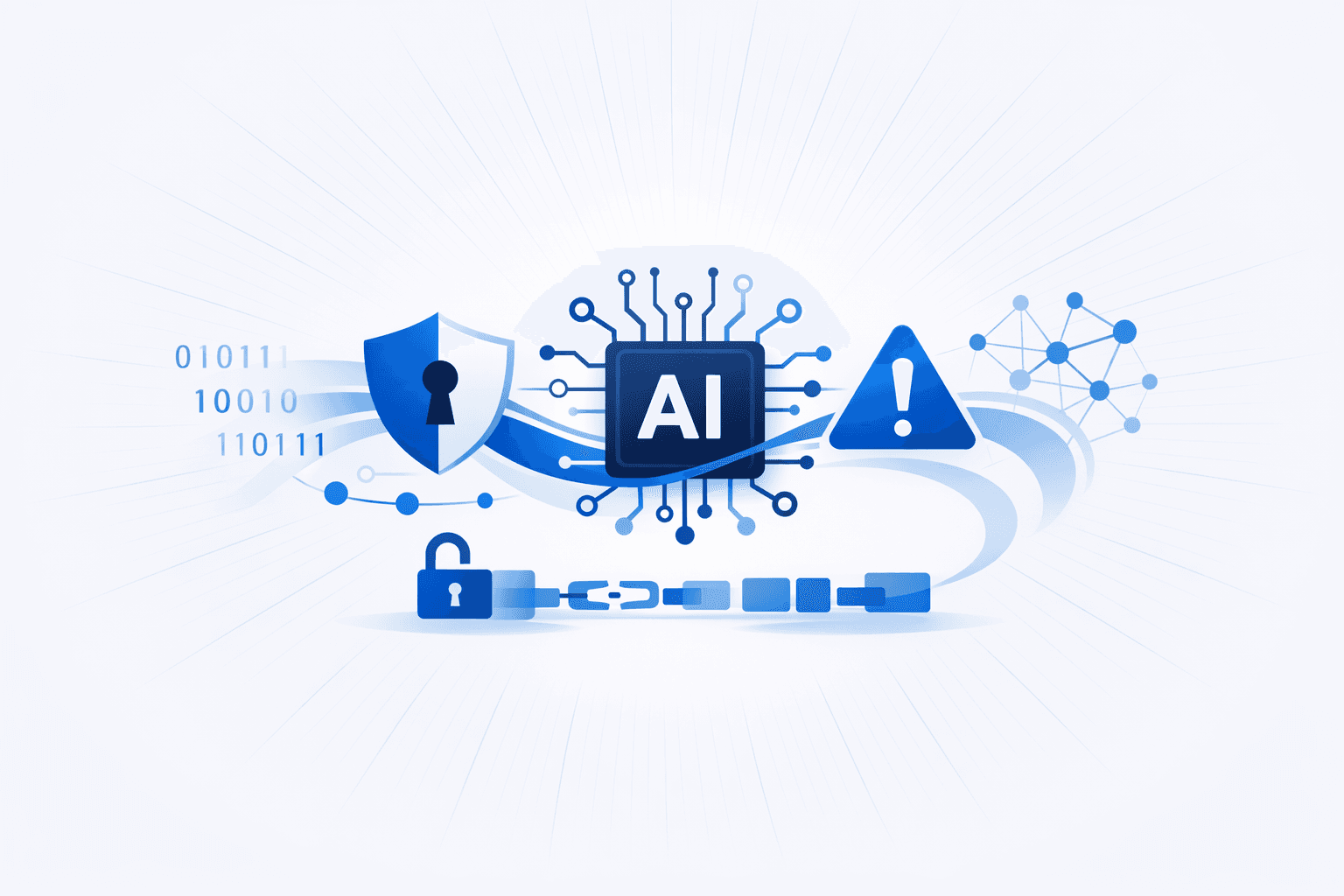
Emerging Security Threats to AI Model Integrity and Supply Chain
Emerging Technology Risk · 3 sources · Updated 5mo ago · First seen Oct 21, 2025

Recent research and industry developments have highlighted significant vulnerabilities in the integrity and security of AI models and their supply chains. Researchers demonstrated that inserting as few as 250 carefully crafted, poisoned documents into an AI model's training data can corrupt its outputs, causing it to generate nonsensical or manipulated responses. This attack method, tested on models up to 13 billion parameters, shows that even a small amount of malicious data can have a disproportionate impact on model behavior, raising concerns about the robustness of AI training pipelines. In parallel, new attack techniques such as the Lies-in-the-Loop (LITL) attack have been identified, where adversaries plant seemingly benign code or dependencies that only reveal malicious behavior under specific runtime conditions. These attacks are particularly insidious because they can deceive AI-powered code assistants, especially those that learn from human feedback, into approving or perpetuating unsafe code. The LITL attack demonstrates that even with human oversight, AI systems can be manipulated into executing or recommending malicious actions, undermining the trust in human-in-the-loop security models. Additionally, the rapid growth of AI model repositories like Hugging Face has introduced new supply chain risks, as models themselves can harbor hidden malware, backdoors, or payloads that activate during inference or deserialization. Security firms are now developing specialized scanners to detect such threats in AI model artifacts, recognizing that traditional software security measures are insufficient for the unique risks posed by AI models. Real-world incidents have already shown that attackers can exploit model file formats to execute arbitrary code or exfiltrate data, making the AI supply chain a lucrative target. The convergence of these threats underscores the urgent need for robust security practices in AI development, including rigorous data curation, model artifact scanning, and enhanced monitoring of AI-assisted development workflows. As AI becomes more deeply integrated into production environments, the potential impact of compromised models or manipulated code suggestions grows, threatening both data integrity and operational security. The industry is responding with new tools and collaborative research, but the evolving threat landscape requires continuous vigilance and adaptation. Organizations deploying AI must recognize that both the data used for training and the models themselves are attack surfaces. Proactive measures, such as integrating supply chain scanning and monitoring AI-human interactions, are essential to mitigate these emerging risks. The findings from recent studies and product announcements serve as a wake-up call for the broader adoption of AI-specific security controls. As adversaries become more sophisticated in targeting AI systems, defenders must stay ahead by understanding and addressing these novel attack vectors. The future of AI security will depend on the industry's ability to anticipate, detect, and neutralize threats at every stage of the AI lifecycle.
Why it matters
Impact assessment
AI developers, MLOps teams, software engineering organizations using AI code assistants, and enterprises consuming third-party models from repositories such as Hugging Face are affected. The primary risks are integrity loss in model outputs, unsafe code generation, arbitrary code execution from malicious model artifacts, data exfiltration, and downstream operational and reputational damage if poisoned or backdoored models reach production.
The exposure is broad because the story describes systemic weaknesses across the AI lifecycle rather than a single vendor flaw. The report cites real-world abuse of model file formats for code execution and data theft, but it does not provide a named in-the-wild campaign, victim list, or confirmed mass exploitation event.
Supporting facts
- Training-data poisoning can materially alter model behavior with as few as 250 crafted documents.
- The poisoning research was tested against models up to 13 billion parameters.
- Lies-in-the-Loop (LITL) attacks target AI-assisted development workflows by embedding code or dependencies that appear benign until specific runtime conditions are met.
- AI systems that incorporate human feedback or human approval can still be manipulated into recommending or accepting unsafe code.
- Model repositories introduce supply-chain risk because model artifacts may contain malware, backdoors, or payloads that trigger during inference or deserialization.
- The story states that attackers have exploited model file formats to achieve arbitrary code execution or exfiltrate data.
- Industries with heavy AI adoption, especially software development, SaaS, cloud, and data-centric enterprises, face elevated exposure due to reliance on external datasets, pretrained models, and AI coding assistants.