AI-Driven Phishing and Social Engineering Threats Escalate in Europe and Beyond
Social Engineering & Fraud · 5 sources · Updated 5mo ago · First seen Oct 17, 2025
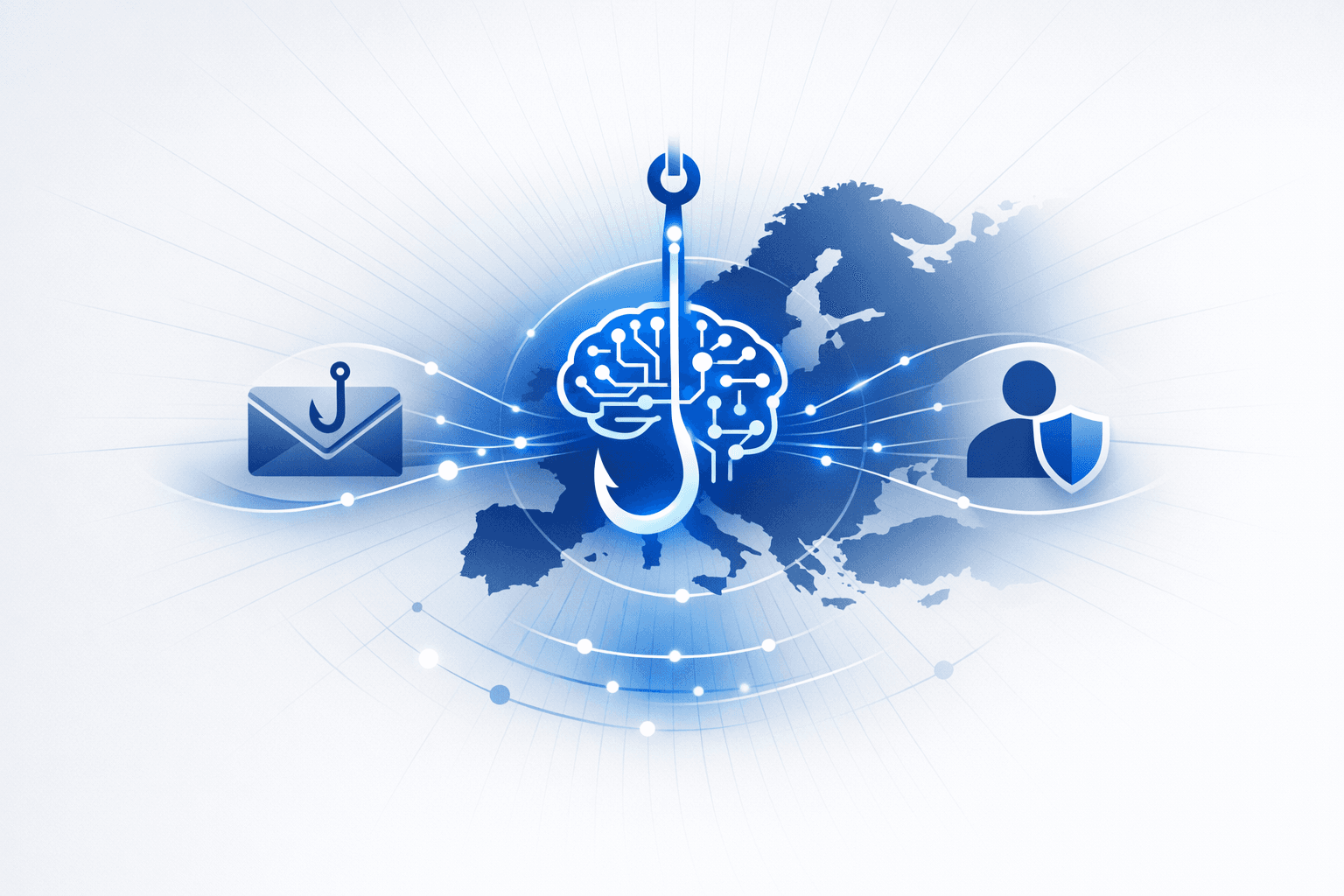
Phishing remains the dominant initial access vector for cyberattacks across Europe, accounting for 60% of incidents between July 2024 and June 2025, as reported by the European Union Agency for Cybersecurity (ENISA). The proliferation of Phishing-as-a-Service (PhaaS) platforms, such as Whisper 2FA, has enabled attackers to automate and scale their operations, targeting a wide range of brands including Microsoft 365, Adobe, and DocuSign. These kits now incorporate advanced features like AJAX-based real-time credential and multi-factor authentication code capture, dense encoding, anti-debugging, and browser freezing to evade detection and analysis. ENISA highlights that AI tools have fundamentally reshaped the threat landscape, with large language models (LLMs) being leveraged to enhance phishing campaigns and automate social engineering, resulting in AI-supported phishing representing over 80% of observed social engineering activity worldwide by early 2025. The report also notes a significant rise in attacks targeting the AI supply chain, with adversaries corrupting components used in AI development and deployment. The sophistication of phishing attacks is further demonstrated by the integration of AI-generated lures, deepfakes, and synthetic media, which are increasingly used in vishing, impersonation, and fraud schemes. The use of AI has not only increased the volume and success rate of phishing campaigns but has also introduced new risks, as AI systems themselves become targets for exploitation. Supply chain attacks have intensified, with threat actors abusing critical digital dependencies to maximize impact, often by targeting customers of compromised organizations. The evolution of phishing tactics is also evident in the widespread adoption of clickbait scams, which use sensationalized headlines and engaging visuals to lure victims into revealing sensitive information or installing malware. Despite increased awareness and training, organizations continue to struggle with the effectiveness of phishing prevention, as attackers adapt their methods to bypass traditional defenses. The ENISA Threat Landscape 2025 report underscores the urgent need for organizations to update their security frameworks, enhance identity and access management, and adopt advanced detection and response strategies to counter the growing threat posed by AI-driven phishing and social engineering attacks. The convergence of AI, automation, and supply chain vulnerabilities has created a complex and rapidly evolving threat environment that demands continuous vigilance and innovation in cybersecurity practices.
Why it matters
Impact assessment
Phishing is the dominant initial access vector in the reported period, accounting for 60% of incidents across Europe from July 2024 to June 2025. The exposure affects nearly all sectors and user populations that rely on cloud identity platforms, email workflows, and brand-trust interactions, with Microsoft 365, Adobe, and DocuSign users specifically named as targets.
The impact is high because these campaigns enable credential theft, MFA interception, account takeover, downstream fraud, and follow-on compromise. The scope is widespread rather than narrowly targeted: ENISA reports AI-supported phishing made up more than 80% of observed social engineering activity worldwide by early 2025, and Whisper 2FA alone was linked to nearly one million phishing intrusions since July.
Supporting details
- ENISA reported phishing accounted for 60% of cyber incidents in Europe between July 2024 and June 2025.
- AI-supported phishing represented more than 80% of observed social engineering activity worldwide by early 2025.
- The story describes broad targeting of enterprise SaaS and document-signing brands, increasing risk across corporate, public-sector, and consumer-facing environments.
- Supply chain exposure is increasing as attackers target AI development and deployment components and abuse trusted digital dependencies to reach customers of compromised organizations.
- Known activity in the wild is explicitly described:
- Whisper 2FA fueled almost one million phishing intrusions since July.
- Whisper 2FA is the third most prevalent PhaaS kit after Tycoon and EvilProxy.
- Likely business consequences include:
- account takeover and unauthorized access
- business email compromise and fraud
- data theft from cloud productivity platforms
- reputational damage from customer-facing impersonation
- operational disruption from incident response and identity resets