Salesforce-Targeted Data Breaches Impacting Google, Workday, and Others via Social Engineering
Social Engineering & Fraud · 18 sources · Updated 5mo ago · First seen Oct 3, 2025
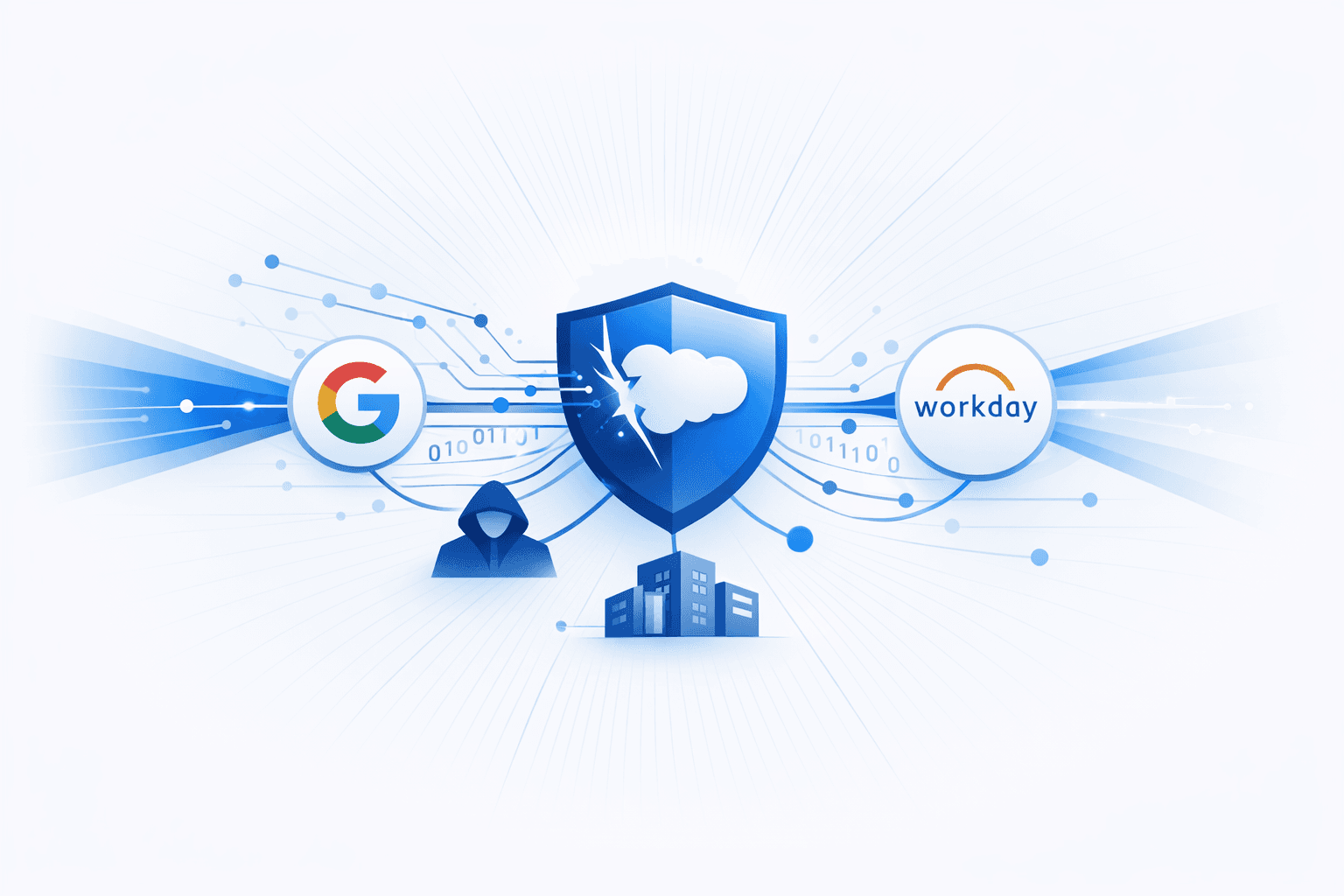
A coordinated wave of cyberattacks in 2025 targeted organizations using Salesforce’s CRM platform, resulting in significant data breaches at major companies including Google and Workday. Attackers exploited the inherent trust and connectivity of cloud-based CRM systems, focusing on social engineering rather than technical vulnerabilities. Workday confirmed that attackers accessed a database containing business contact information for up to 11,000 corporate customers and 70 million individual user records, with the breach discovered in early August 2025. Google also disclosed that its Salesforce instance used for Google Ads leads was compromised, leading to the theft of over 2.5 million customer records, including business contact details and sales notes for small and mid-sized clients. Cisco and other organizations were also listed among the victims of this campaign. The threat group responsible, identified as UNC6040 and associated with ShinyHunters, used telephone-based social engineering (vishing) to trick employees into granting access or sharing credentials. Attackers convinced targets to use a modified, unauthorized version of the Salesforce Data Loader app, which enabled them to exfiltrate sensitive data from Salesforce environments. Mandiant, working with Google, provided proactive defense recommendations, emphasizing that the attacks did not exploit Salesforce vulnerabilities but rather relied on manipulating end users. The attackers’ tactics included delayed extortion demands, sometimes occurring months after the initial compromise. The breaches highlighted the risks of interconnected cloud services and the importance of robust identity and access management. Security experts stressed the need for organizations to harden their Salesforce and other cloud assets against social engineering. The incidents underscored the growing trend of targeting SaaS platforms through human factors rather than technical flaws. Lessons from these breaches include the necessity of employee training, multi-factor authentication, and vigilant monitoring of third-party integrations. The scale and sophistication of the attacks demonstrated the evolving threat landscape for cloud-based business applications. Organizations are urged to review their incident response plans and ensure that all users are aware of the risks posed by social engineering campaigns. The breaches serve as a warning for enterprises to reassess their security posture around cloud CRM platforms and to implement layered defenses against both technical and human-centric threats.
Why it matters
Impact assessment
A broad set of Salesforce customers across technology, education, retail, aviation, insurance, and other enterprise sectors are affected by a sustained social-engineering and extortion campaign rather than a platform-side Salesforce exploit. Impact ranges from exposure of business contact data and sales records to large-scale theft of customer information, followed by delayed extortion demands that can create regulatory, financial, and reputational damage.
The scope is multi-victim and likely widespread among organizations with Salesforce integrations, help-desk workflows, or weak controls around OAuth apps and bulk data tools. Exploitation in the wild is confirmed: Google, Workday, McGraw Hill, and other named organizations disclosed impacts, while the FBI and GTIG reported active campaigns by UNC6040 and UNC6395.
Supporting details
- Threat actors: UNC6040, UNC6395, ShinyHunters, “Scattered LAPSUS$ Hunters”; campaign infrastructure reportedly overlaps with “The Com” ecosystem.
- Confirmed or reported victims/entities: Google, Workday, McGraw Hill, Cisco, Rockstar Games, Toyota, FedEx, Disney/Hulu, UPS, Bumble, Match Group, Canada Goose, University of Pennsylvania, European Commission, Discord, Red Hat.
- Workday disclosed access to a database containing business contact information for up to 11,000 corporate customers and 70 million individual user records.
- Google disclosed compromise of a Salesforce instance used for Google Ads leads, with theft of more than 2.5 million customer records including business contact details and sales notes.
- McGraw Hill reported a limited breach of non-sensitive information from a Salesforce-hosted webpage and said customer databases, courseware, internal systems, SSNs, financial information, and student data were not involved.
- Threat actors claimed theft of 45 million Salesforce records in one case and nearly 1 billion records overall across the campaign; some claims remain unverified.
- Extortion was a recurring follow-on effect, with demands arriving days to months after initial compromise.
- FBI assessed related OAuth-token abuse via Salesloft Drift could potentially affect hundreds of organizations.